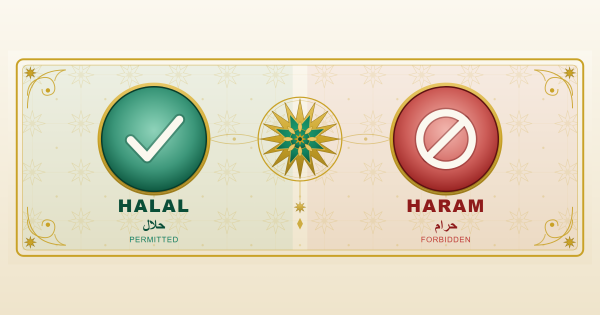
الحرام في اللغة والاصطلاح هو ما نهى الله عنه نهيًا جازمًا. فمن تركه طاعةً لله أُثيب على تركه، ومن فعله عالمًا به أثِم. وضدُّه الحلال، وهو ما أباحه الله وأذن به. وفهم معنى الحرام، وموقعه بين الحلال وما بينهما من مراتب، هو من أوائل ما يعين المسلم على ممارسة دينه بثقة وطمأنينة.
يشرح هذا الدليل معنى الحرام، وكيف يحكم العلماء بأن شيئًا ما محرَّم، وأشهر الأمثلة عليه، والفرق بينه وبين المكروه. وهو مكتوب بلغة ميسَّرة للمتعلمين والآباء؛ أمّا الحكم في مسألة شخصية بعينها فيُرجع فيه دائمًا إلى عالم موثوق.
ما معنى "الحرام" في الإسلام؟
الحرام هو ما طلب الشارع تركه طلبًا جازمًا. فمن امتنع عنه امتثالًا لأمر الله نال الأجر، ومن ارتكبه كان آثمًا محاسَبًا عليه. ولخطورة هذا الحكم، لا يُطلق العلماء وصف "الحرام" على شيء إلا بدليل واضح.
الحلال والحرام: طرفا الميزان
كثيرًا ما يُذكر الحلال والحرام معًا، لكنهما طرفان في ميزان أوسع. ومن القواعد النافعة في المعاملات وأمور الدنيا أنّ الأصل فيها الإباحة، فالأشياء مأذون بها ما لم يرد دليل يمنعها. أمّا العبادات فالأصل فيها التوقيف، أي أنها تؤخذ من الوحي لا تُبتدع. ولذلك فإن الحكم بالتحريم يحتاج إلى دليل، لا إلى مجرد ذوق أو عادة.
الأحكام الخمسة في الشريعة
يصنّف العلماء أفعال المكلَّفين إلى خمسة أحكام معروفة، والحرام واحد منها فقط:
- الفرض / الواجب - ما يلزم فعله، كالصلوات الخمس؛ يُثاب فاعله ويأثم تاركه.
- المندوب / المستحبّ - ما يُرغَّب فيه؛ يُثاب فاعله ولا يأثم تاركه.
- المباح - ما استوى فيه الفعل والترك؛ وهو الفضاء الواسع لخيارات الحلال المعتادة.
- المكروه - ما يُطلب تركه طلبًا غير جازم؛ يُثاب تاركه ولا يأثم فاعله.
- الحرام - ما يُطلب تركه طلبًا جازمًا؛ يأثم فاعله ويُثاب تاركه.
ورؤية الحرام داخل هذه الصورة الأوسع تقي من خطأين شائعين: عدّ كل مكروه محرَّمًا، والتهاون بالمحرَّمات الكبيرة وكأنها صغائر.
كيف يُحكَم بأن شيئًا ما حرام؟
الحكم بالتحريم ليس رأيًا شخصيًا، بل يستنبطه العلماء المؤهَّلون من مصادر الشريعة المعتبرة:
- القرآن الكريم - ما جاء فيه من نهي صريح في وحي الله.
- السُّنّة الصحيحة - هدي النبي محمد صلى الله عليه وسلم وتعليمه.
- إجماع العلماء والقياس الصحيح الذي يجريه أهل العلم.
قال النبي محمد صلى الله عليه وسلم: "إنّ الحلال بيّن وإنّ الحرام بيّن، وبينهما أمور مشتبهات لا يعلمهنّ كثير من الناس"، وأرشد إلى الاحتياط في المشتبهات. ولهذا، إذا التبس الأمر حقًّا، فالطريق الآمن سؤال أهل العلم لا الظنّ والتخمين.
أمثلة شائعة على الحرام
هذه أنواع متفق عليها في الجملة، مع أنّ بعض الصور قد يكون فيها تفصيل عند العلماء واختلاف بين المذاهب؛ فاعتبِر هذا عرضًا عامًّا لا فتوى في حالة بعينها.
الطعام والشراب
لحم الخنزير ومشتقّاته، والدم، والميتة (ما مات دون ذكاة شرعية)، وما لم يُذكَّ على الوجه الشرعي، وكل مُسكِر - من الخمر وسائر ما يغيّب العقل.
المال والمعاملات
الرِّبا، والميسر (القمار)، والرِّشوة، والسرقة، والغشّ، وأكل أموال الناس بالباطل.
القول والسلوك
الكذب، والغِيبة، والنميمة، وخيانة الأمانة، وظلم الناس والإضرار بهم. وأعظم ذلك كله الشِّرك بالله، وهو أكبر المحرَّمات على الإطلاق.
الحرام والمكروه: بين المحظور والمرجوح
من مواضع اللبس الشائعة الفرق بين الحرام والمكروه. فالمكروه ما يُثاب المرء على تركه ولا يأثم بفعله، أمّا الحرام فيأثم فاعله عالمًا. والتفريق بينهما يحمي المؤمن من الحرج بلا موجب في المكروهات المباحة، ومن التهاون في المحرَّمات الحقيقية.
تعليم الأطفال الحلال والحرام
الغاية عند الأسرة ليست مجرد قائمة أوامر، بل علاقة محبّة بالله تجعل الخيار الحسن أمرًا طبيعيًّا. والشرح المناسب لسنّ الطفل، وثبات الوالدين، وربط الحلال والحرام بالرحمة والصدق والشكر - كلها تعين الأبناء على استبطان هذه القيم. وفي مكتبتنا أدلّة عملية في هذا الباب تحديدًا:
واصل التعلّم
أدلّة ذات صلة من مكتبة كُتّاب
الأسئلة الشائعة
ما معنى الحرام في الإسلام؟
الحرام هو ما نهى الله عنه نهيًا جازمًا. فمن تركه طاعةً لله أُثيب، ومن فعله عالمًا به أثِم.
ما الفرق بين الحلال والحرام؟
الحلال ما أذن به الشرع، والحرام ما نهى عنه نهيًا جازمًا. وهما طرفان في ميزان من خمسة أحكام يشمل كذلك الواجب والمندوب والمكروه. والأصل في أمور الدنيا الإباحة ما لم يرد دليل بالمنع.
هل المكروه مثل الحرام؟
لا. المكروه ما يُثاب المرء على تركه ولا يأثم بفعله، أمّا الحرام فيأثم فاعله عالمًا. ولا يُوصف شيء بالحرام إلا بدليل واضح.
كيف يحكم العلماء بأن شيئًا ما حرام؟
يُستنبط حكم التحريم من القرآن الكريم، والسُّنّة الصحيحة للنبي محمد صلى الله عليه وسلم، وإجماع العلماء، والقياس الصحيح عند أهل العلم - لا من الرأي أو العادة. وإذا التبس الأمر فالإرشاد هو سؤال أهل العلم.
ما بعض الأمثلة الشائعة على الحرام؟
من الأمثلة المتفق عليها: الخنزير والدم والميتة والمسكرات كالخمر في الطعام والشراب؛ والرِّبا والقمار والسرقة والغشّ في المال؛ والكذب والغِيبة والظلم في السلوك. وأعظم المحرَّمات الشِّرك بالله. وبعض الصور فيها تفصيل عند العلماء، فيُرجع للعالم في المسائل الشخصية.
هل ترغب في تعلّم القرآن والعربية والقيم الإسلامية مع معلّم مؤهَّل؟ تصفّح معلّمي كُتّاب وابدأ التعلّم وفق وتيرتك الخاصة.
Haram (Arabic: حَرَام) means "forbidden" or "prohibited." In Islam, something described as haram is an act that Allah has clearly made unlawful: avoiding it is an act of obedience that is rewarded, and doing it knowingly is a sin. Its opposite is halal (حَلَال), meaning "lawful" or "permitted." Understanding what haram means - and how it fits alongside halal and the categories in between - is one of the first steps in practising the faith with confidence.
This guide explains the meaning of haram, how scholars determine that something is forbidden, common examples, and how haram differs from the merely disliked. It is written as a plain-language overview for learners and parents; for a ruling on a specific personal situation, always consult a qualified scholar.
What does "haram" mean in Islam?
Linguistically, haram comes from a root meaning something sacred or set apart, and in Islamic law it refers to what is decisively prohibited. A person who abstains from a haram act out of obedience to Allah earns reward, while committing it is a sin for which one is accountable. Because the ruling is serious, scholars are careful never to label something haram without clear evidence.
Halal and haram: the two anchors
Muslims often speak of halal and haram as a pair, but they sit at the two ends of a wider scale. A helpful principle in everyday, worldly matters (as opposed to acts of worship) is that the default is permissibility: things are considered allowed unless there is clear evidence making them otherwise. Acts of worship work the other way - they are established by revelation rather than invented. This is why declaring something haram requires proof, not merely personal preference or custom.
The five categories of Islamic rulings
Islamic scholars classify human actions into five well-known categories (al-ahkam al-khamsa). Haram is only one of them:
- Fard / Wajib (obligatory) - required; e.g. the five daily prayers. Doing it is rewarded, neglecting it is sinful.
- Mandub / Mustahabb (recommended) - encouraged; rewarded when done, but no sin for leaving it.
- Mubah (permissible) - neutral and allowed; the broad space of ordinary halal choices.
- Makruh (disliked) - discouraged; rewarded to avoid, but not sinful to do.
- Haram (forbidden) - prohibited; sinful to do, rewarded to avoid.
Seeing haram inside this bigger picture helps prevent two common mistakes: treating every disliked thing as forbidden, and treating serious prohibitions as if they were minor.
How is something determined to be haram?
A ruling of haram is not a matter of opinion. Qualified scholars derive it from the established sources of Islamic law:
- The Qur'an - explicit prohibitions in Allah's revelation.
- The authentic Sunnah - the teachings and example of the Prophet Muhammad (peace be upon him).
- Scholarly consensus (ijma') and sound analogical reasoning (qiyas) applied by trained scholars.
The Prophet Muhammad (peace be upon him) said: "The lawful is clear and the unlawful is clear, and between the two are doubtful matters which many people do not know." He advised caution with what is doubtful. This is why, when a matter is genuinely unclear, the safe path is to ask someone with knowledge rather than to guess.
Common examples of haram
The following are widely agreed-upon categories. Specific cases can carry scholarly nuance and differences between the schools of law, so treat this as an overview rather than a personal fatwa.
Food and drink
Pork and its by-products, blood, carrion (an animal that died without proper slaughter), meat not slaughtered according to Islamic guidance, and all intoxicants - alcohol (khamr) and other substances that cloud the mind.
Wealth and dealings
Interest/usury (riba), gambling (maysir), bribery, theft, fraud, and taking others' property unjustly.
Speech and conduct
Lying, backbiting (ghibah), slander, breaking trusts, and wronging or harming others (zulm). Above all stands shirk - associating partners with Allah - which is the gravest prohibition of all.
Haram vs. makruh: forbidden vs. disliked
A frequent point of confusion is the difference between haram and makruh. Something makruh is disliked: you are rewarded for avoiding it, but you are not sinful if you do it. Something haram is forbidden: doing it knowingly is a sin. Keeping the two apart protects a believer from both unnecessary guilt over disliked-but-allowed things and carelessness toward genuine prohibitions.
Teaching children about halal and haram
For families, the goal is not simply a list of rules but a loving relationship with Allah in which good choices feel natural. Age-appropriate explanations, consistency between parents, and connecting halal and haram to kindness, honesty and gratitude all help children internalise these values. Our library has practical guides on exactly this:
Keep learning
Related guides from the Kuttab library
Frequently asked questions
What does haram mean in Islam?
Haram means "forbidden" or "prohibited." It refers to an action that Allah has clearly made unlawful. Avoiding a haram act out of obedience is rewarded, and doing it knowingly is a sin.
What is the difference between halal and haram?
Halal means lawful or permitted, and haram means forbidden. They are the two ends of a five-part scale that also includes obligatory, recommended, and disliked actions. In everyday worldly matters the default is that things are permitted unless there is clear evidence that they are forbidden.
Is makruh the same as haram?
No. Makruh means disliked or discouraged: you are rewarded for avoiding it, but it is not sinful to do. Haram is forbidden, and doing it knowingly is sinful. Only what is clearly established by evidence is called haram.
How do scholars decide that something is haram?
A ruling of haram is derived from the Qur'an, the authentic Sunnah of the Prophet Muhammad (peace be upon him), scholarly consensus, and sound analogical reasoning by qualified scholars - not from personal opinion or custom. When a matter is genuinely doubtful, the guidance is to ask someone with knowledge.
What are some common examples of haram?
Widely agreed-upon examples include pork, blood, carrion and intoxicants such as alcohol; interest (riba), gambling, theft and fraud in wealth; and lying, backbiting and injustice in conduct. The gravest prohibition is shirk - associating partners with Allah. Specific cases can carry scholarly nuance, so consult a qualified scholar for personal rulings.
Want to study the Qur'an, Arabic and Islamic values with a qualified teacher? Explore Kuttab's teachers and start learning at your own pace.
Related: haram