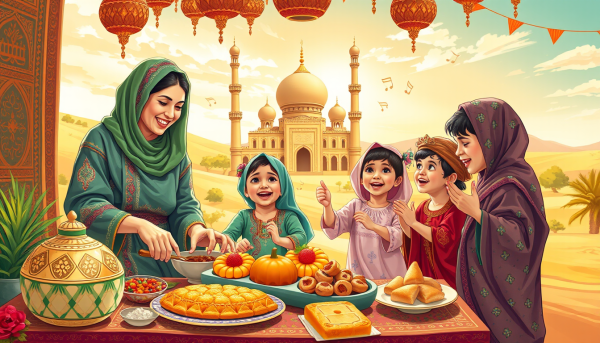
1. عيد الفطر
عيد الفطر، المعروف أيضًا باسم "عيد فطر الصيام"، يحتفل بنهاية شهر رمضان، شهر الصيام والصلاة. يُحتفل به في اليوم الأول من شهر شوال، الشهر العاشر في التقويم الهجري الإسلامي، وهو مناسبة مبهجة تبدأ بصلاة خاصة في المسجد تُعرف بصلاة العيد.
التقاليد الأسرية:
- التحضير للعيد: غالبًا ما يقضي العائلات الأيام الأخيرة من رمضان في التحضير للعيد من خلال التسوق لشراء الملابس الجديدة والحلويات والهدايا.
- مشاركة الوجبات: يبدأ اليوم عادةً بفطور احتفالي، تليه تجمعات الغداء والعشاء مع العائلة والأصدقاء، تتضمن أطباقًا تقليدية وحلويات.
- زكاة الفطر: قبل صلاة العيد، يُشجع العائلات على تقديم الصدقات (زكاة الفطر) لمساعدة المحتاجين، لضمان أن يتمكن الجميع من المشاركة في الاحتفالات.
2. عيد الأضحى
عيد الأضحى، أو "عيد الأضحى"، يحيي ذكرى استعداد النبي إبراهيم (عليه السلام) للتضحية بابنه إسماعيل (عليه السلام) طاعةً لأمر الله. يقع هذا العيد في اليوم العاشر من شهر ذي الحجة، الشهر الأخير في التقويم الهجري، ويتزامن مع حج المسلمين.
التقاليد الأسرية:
- الأضحية: الأسر التي تستطيع تحمل التكاليف ستضحي بحيوان (عادةً ما يكون خروفًا أو ماعزًا أو بقرة) كعمل رمزي لطاعة الله. يُقسم اللحم إلى ثلاثة أجزاء: ثلث للعائلة، وثلث للأقارب والأصدقاء، وثلث للمحتاجين.
- التجمعات والولائم: مثل عيد الفطر، تجتمع الأسر لتناول الوجبات والاستمتاع بالأطباق التقليدية. إنها وقت لزيارة الأقارب والأصدقاء، وتعزيز الروابط الاجتماعية.
- الملابس الجديدة والهدايا: يرتدي العديد من الناس ملابس جديدة للمناسبة ويتبادلون الهدايا، خاصةً للأطفال.
3. رمضان
بينما لا يعتبر عيدًا في حد ذاته، فإن رمضان هو شهر الصيام والصلاة والتأمل الذي يحمل أهمية عميقة في التقويم الإسلامي. يصوم المسلمون من الفجر حتى الغروب، ممتنعين عن الطعام والشراب واحتياجاتهم البدنية الأخرى.
التقاليد الأسرية:
- الإفطار: كل مساء، تجتمع العائلات لتفطر معًا، حيث يبدأون عادةً بالتمر والماء، يتبعها وجبة أكبر. هذه لحظة ثمينة لترابط الأسرة.
- صلاة التراويح: تحضر العديد من العائلات صلاة التراويح الليلية في المسجد معًا، مما يعزز من اتصالهم الروحي.
- أعمال الخير: يبرز رمضان أهمية السخاء والرحمة، حيث يُشجع العائلات على القيام بأعمال خيرية، والتبرع للمحتاجين، والتطوع في مجتمعاتهم.
4. عاشوراء
تُObserved عاشوراء في اليوم العاشر من شهر محرم، وتحمل أهمية خاصة لمختلف الطوائف الإسلامية. بالنسبة للمسلمين السنة، هو يوم صيام وتأمل، بينما بالنسبة للمسلمين الشيعة، يحيي ذكرى استشهاد الإمام حسين، حفيد النبي محمد (صلى الله عليه وسلم).
التقاليد الأسرية:
- الصيام والتأمل: يصوم العديد من المسلمين في هذا اليوم، يتأملون في دروس الصبر والتضحية.
- التجمعات التأبينية: غالبًا ما تعقد العائلات الشيعية تجمعات لسرد قصة الإمام حسين والانخراط في طقوس الحزن، مما يعزز الشعور بالمجتمع والذكرى.
- الخدمة المجتمعية: تعتبر أعمال الخير، مثل تقديم الوجبات للمحتاجين، من الممارسات الشائعة خلال عاشوراء، مما يعكس أهمية الرحمة والمسؤولية الاجتماعية.
الخاتمة
تثري الاحتفالات الإسلامية والتقاليد الأسرية النسيج الثقافي للمجتمعات المسلمة في جميع أنحاء العالم. إنها لحظات حيوية لتقوية الروابط الأسرية، وتعزيز التآزر الاجتماعي، والتأمل الروحي. من خلال هذه الممارسات، تنقل العائلات قيم الإيمان والرحمة والسخاء، مما يضمن استمرار جوهر الإسلام عبر الأجيال. بينما نحتفل بهذه المناسبات، نتذكر أهمية الوحدة والامتنان ومشاركة الفرح مع الآخرين.
1. Eid al-Fitr
Eid al-Fitr, also known as the "Festival of Breaking the Fast," marks the end of Ramadan, a month of fasting and prayer. Celebrated on the first day of Shawwal, the tenth month of the Islamic lunar calendar, Eid al-Fitr is a joyous occasion that begins with a special prayer at the mosque, known as the Eid prayer.
Family Traditions:
- Preparation for Eid: Families often spend the last few days of Ramadan preparing for Eid by shopping for new clothes, sweets, and gifts.
- Sharing Meals: The day typically begins with a festive breakfast, followed by lunch and dinner gatherings with extended family and friends, featuring traditional dishes and sweets.
- Zakat al-Fitr: Before the Eid prayer, families are encouraged to give to charity (Zakat al-Fitr) to help those in need, ensuring everyone can partake in the celebrations.
2. Eid al-Adha
Eid al-Adha, or the "Festival of Sacrifice," commemorates the willingness of Prophet Ibrahim (Abraham) to sacrifice his son Isma'il (Ishmael) in obedience to God's command. This holiday falls on the 10th day of Dhu al-Hijjah, the last month of the Islamic calendar, coinciding with the Hajj pilgrimage.
Family Traditions:
- Qurbani (Sacrifice): Families who can afford it will sacrifice an animal (usually a sheep, goat, or cow) as a symbolic act of obedience. The meat is divided into three parts: one-third for the family, one-third for relatives and friends, and one-third for those in need.
- Gatherings and Feasting: Much like Eid al-Fitr, families come together to share meals and enjoy traditional dishes. It is a time for visiting relatives and friends, strengthening communal bonds.
- New Clothes and Gifts: Many people wear new clothes for the occasion and exchange gifts, especially for children.
3. Ramadan
While not a festival in itself, Ramadan is a month of fasting, prayer, and reflection that holds profound significance in the Islamic calendar. Muslims fast from dawn until sunset, refraining from food, drink, and other physical needs.
Family Traditions:
- Iftar: Each evening, families gather to break their fast with Iftar, often starting with dates and water, followed by a larger meal. This is a cherished time for family bonding.
- Taraweeh Prayers: Many families attend nightly Taraweeh prayers at the mosque together, strengthening their spiritual connection.
- Acts of Charity: Ramadan emphasizes generosity and compassion, with families encouraged to engage in charitable acts, donate to the less fortunate, and volunteer in their communities.
4. Ashura
Ashura is observed on the 10th of Muharram and holds special significance for different sects within Islam. For Sunni Muslims, it is a day of fasting and reflection, while for Shia Muslims, it commemorates the martyrdom of Imam Hussain, the grandson of Prophet Muhammad.
Family Traditions:
- Fasting and Reflection: Many Muslims fast on this day, reflecting on the lessons of patience and sacrifice.
- Commemorative Gatherings: Shia families often hold gatherings to recount the story of Imam Hussain and engage in mourning rituals, fostering a sense of community and remembrance.
- Community Service: Acts of charity, such as providing meals to the needy, are common practices during Ashura, reflecting the importance of compassion and social responsibility.
Conclusion
Islamic celebrations and family traditions enrich the cultural fabric of Muslim communities worldwide. They serve as vital moments for family togetherness, communal bonding, and spiritual reflection. Through these observances, families pass down values of faith, compassion, and generosity, ensuring that the essence of Islam continues to thrive across generations. As we celebrate these occasions, we are reminded of the importance of unity, gratitude, and sharing joy with one another.