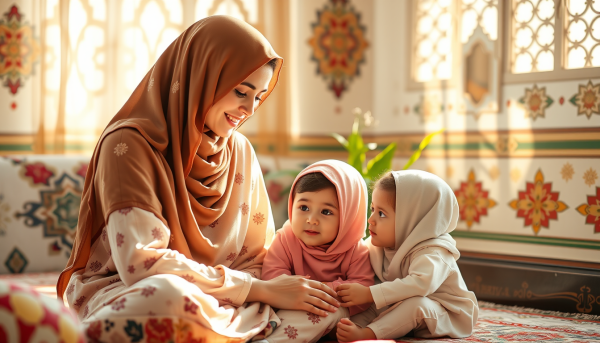
1. غرس قيمة التعاطف من خلال القصص
تاريخ الإسلام غني بالقصص التي تجسد التعاطف. حياة النبي محمد (صلى الله عليه وسلم) مليئة بالحالات التي تعكس اللطف والرحمة تجاه الآخرين، بما في ذلك الحيوانات والمحتاجين. يمكن أن تلهم مشاركة هذه القصص الأطفال ليتبعوا هذه القيم. على سبيل المثال:
-
قصة النبي والمرأة الفقيرة: حدث أطفالك عن كيفية مساعدة النبي لامرأة فقيرة كانت في ضائقة. توضح هذه القصة أهمية مساعدة المحتاجين.
-
رحمة النبي: ناقش كيف كان النبي رحيمًا حتى مع أعدائه. يعلم هذا الأطفال أن التعاطف يجب أن يمتد حتى لأولئك الذين قد لا يعاملونا بشكل جيد.
2. ممارسة التعاطف في المواقف اليومية
شجع أطفالك على وضع أنفسهم في مكان الآخرين. ناقش سيناريوهات مختلفة واسألهم كيف سيشعرون في ذلك الموقف. يمكنك استخدام أمثلة من الحياة الواقعية أو حتى قصص من القرآن لتسليط الضوء على أهمية فهم مشاعر الآخرين. تساعد هذه الممارسة الأطفال على تطوير الذكاء العاطفي والتعاطف.
3. تعليم أهمية العطاء
تولي الإسلام أهمية كبيرة للصدقة (الزكاة والصدقة) كوسيلة لتنقية الثروة ومساعدة المحتاجين. اشرك أطفالك في الأنشطة الخيرية:
-
التطوع معًا: شارك في خدمة المجتمع أو تطوع في جمعية محلية. هذه التجربة العملية تعلم الأطفال فرحة العطاء.
-
تشجيع الأعمال الصغيرة لللطف: شجع أطفالك على أداء أعمال صغيرة من اللطف، مثل مساعدة الجيران أو مشاركة ألعابهم. هذه طريقة بسيطة ولكنها قوية لتعزيز التعاطف.
4. نموذج سلوك رحيم
يتعلم الأطفال من خلال مراقبة والديهم. نمذج التعاطف في تفاعلاتك اليومية، سواء كان ذلك من خلال إظهار اللطف لأفراد الأسرة أو الأصدقاء أو حتى الغرباء. عندما يرى أطفالك تصرفاتك مليئة بالتعاطف، من المحتمل أن يتبنوا سلوكيات مماثلة.
5. دمج التعاليم الإسلامية حول اللطف
علم أطفالك التعاليم ذات الصلة من القرآن والحديث التي تبرز التعاطف:
-
آيات قرآنية: شارك آيات مثل سورة الأنفال (8:61) التي تشجع على صنع السلام وإظهار اللطف.
-
أمثلة من الحديث: ناقش أحاديث تبرز أهمية الرحمة، مثل، "الراحمون يرحمهم الرحمن، ارحموا من في الأرض يرحمكم من في السماء" (سنن الترمذي).
6. تشجيع الاحترام لجميع الكائنات الحية
يعلم الإسلام احترام جميع مخلوقات الله. علم أطفالك أهمية معاملة الحيوانات والطبيعة بلطف. ناقش قصص رحمة النبي تجاه الحيوانات، مثل القط الذي اعتنى به، مما يمكن أن يغرس الاحترام لجميع الكائنات الحية.
7. تعزيز التسامح والفهم
علم أطفالك قيمة التسامح، وهو موضوع مركزي في الإسلام. اشرح لهم أن التمسك بالغضب أو الضغينة يمكن أن يؤدي إلى التعاسة، بينما يجلب التسامح السلام. ساعدهم في ممارسة مسامحة الآخرين، مؤكدًا أنها طريقة لإظهار التعاطف والفهم.
8. إنشاء مجتمع متعاطف
شجع أطفالك على بناء علاقات مع أقران يشاركونهم القيم نفسها. انخرط مع مجموعات المجتمع أو المنظمات التي تعزز التعاطف والتسامح والفهم. يمكن أن يعزز المجتمع الداعم الدروس المستفادة في المنزل.
الخاتمة
تربية أطفال متعاطفين هي هدف نبيل يمكن أن يغنيه بشكل عميق التعاليم الإسلامية. من خلال مشاركة القصص، ونموذج سلوك رحيم، ودمج قيم اللطف والتعاطف في الحياة اليومية، يمكن للآباء أن يزرعوا جيلًا جديدًا من الأفراد الذين يهتمون بالآخرين. من خلال القيام بذلك، لا يكتفون بأداء دورهم كآباء فحسب، بل يسهمون أيضًا في خلق عالم أكثر رحمة.
1. Instill the Value of Compassion Through Stories
Islamic history is rich with stories that exemplify compassion. The life of Prophet Muhammad (peace be upon him) is filled with instances of kindness and empathy towards others, including animals and the less fortunate. Sharing these stories can inspire children to emulate these values. For example:
-
The Story of the Prophet and the Poor Woman: Tell your children about how the Prophet helped a poor woman who was in distress. This story illustrates the importance of helping those in need.
-
The Mercy of the Prophet: Discuss how the Prophet was merciful even to his enemies. This teaches children that compassion should extend even to those who may not treat us well.
2. Practice Empathy in Everyday Situations
Encourage your children to put themselves in someone else’s shoes. Discuss various scenarios and ask them how they would feel in that situation. You can use real-life examples or even stories from the Quran to highlight the importance of understanding others’ feelings. This practice helps children develop emotional intelligence and empathy.
3. Teach the Importance of Giving
Islam places great emphasis on charity (Zakat and Sadaqah) as a means to purify wealth and help those in need. Involve your children in charitable activities:
-
Volunteer Together: Participate in community service or volunteer at a local charity. This hands-on experience teaches children the joy of giving.
-
Encourage Small Acts of Kindness: Encourage your children to perform small acts of kindness, such as helping a neighbor or sharing their toys. This can be a simple yet powerful way to foster compassion.
4. Model Compassionate Behavior
Children learn by observing their parents. Model compassion in your daily interactions, whether it's showing kindness to family members, friends, or even strangers. When your children see you acting with empathy, they are likely to adopt similar behaviors.
5. Integrate Islamic Teachings on Kindness
Teach your children the relevant teachings from the Quran and Hadith that emphasize compassion:
-
Quranic Verses: Share verses such as Surah Al-Anfal (8:61), which encourages making peace and showing kindness.
-
Hadith Examples: Discuss Hadith that highlight the importance of compassion, such as, "The merciful are shown mercy by the Merciful. Be merciful on the earth, and you will be shown mercy from above” (Sunan Al-Tirmidhi).
6. Encourage Respect for All Living Beings
Islam teaches respect for all of Allah's creations. Teach your children about the importance of treating animals and nature with kindness. Discuss stories of the Prophet’s compassion towards animals, like the cat he cared for, which can instill respect for all living beings.
7. Promote Forgiveness and Understanding
Teach your children the value of forgiveness, a central theme in Islam. Explain that holding onto anger or resentment can lead to unhappiness, while forgiveness brings peace. Help them practice forgiving others, reinforcing that it’s a way to show compassion and understanding.
8. Create a Compassionate Community
Encourage your children to build relationships with peers who share similar values. Engage with community groups or organizations that promote compassion, tolerance, and empathy. A supportive community can reinforce the lessons learned at home.
Conclusion
Raising compassionate children is a noble goal that can be profoundly enriched by Islamic teachings. By sharing stories, modeling compassionate behavior, and integrating the values of kindness and empathy into everyday life, parents can cultivate a new generation of caring individuals. In doing so, they not only fulfill their role as parents but also contribute to creating a more compassionate world.
Related: islamic creation story