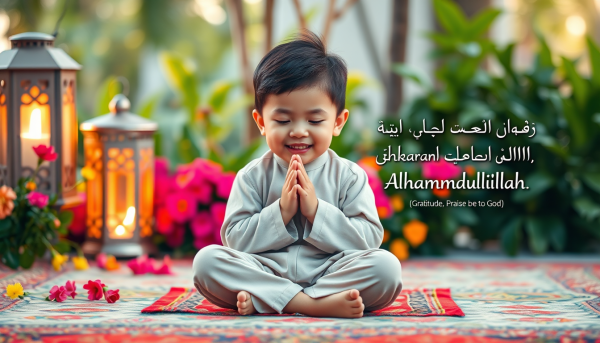
1. فهم الصبر (صبر)
الصبر هو سمة محبوبة في الإسلام. يذكر القرآن أهمية الصبر في سياقات مختلفة، مما يبرز دوره في مواجهة تحديات الحياة. يمكن للآباء تعليم أطفالهم عن الصبر من خلال:
-
مشاركة القصص من القرآن: رواية قصص الأنبياء الذين أظهروا صبرًا عظيمًا، مثل النبي أيوب خلال محنته. مناقشة كيف تم مكافأتهم من قبل الله، مما يساعد الأطفال على فهم الفوائد طويلة الأمد للانتظار والثقة في خطة الله.
-
تشجيع استراتيجيات التكيف: مساعدة الأطفال على تطوير استراتيجيات للتعامل مع الإحباط أو خيبة الأمل. يمكن أن يشمل ذلك أخذ نفس عميق، العد حتى عشرة، أو التحدث عن مشاعرهم. التأكيد على أن الصبر ليس مجرد انتظار، بل أيضًا كيفية استجابتهم للانتظار يمكن أن يمكّنهم.
-
نمذجة الصبر: يتعلم الأطفال الكثير من خلال مراقبة والديهم. من خلال إظهار الصبر في المواقف اليومية—مثل الانتظار في الطابور أو التعامل مع التأخيرات غير المتوقعة—يعلمهم كيفية التعامل مع مواقف مماثلة بهدوء.
2. احتضان الامتنان (شكر)
الامتنان هو جانب أساسي آخر من تعاليم الإسلام. يشجع القرآن المؤمنين على أن يكونوا شاكرين على نعم الله. لتغرس الامتنان في الأطفال:
-
دفاتر الامتنان: شجع الأطفال على الاحتفاظ بدفتر امتنان حيث يكتبون فيه ثلاثة أشياء هم شاكرون لها كل يوم. تساعد هذه الممارسة على التعرف على النعم في حياتهم وتقديرها.
-
الأدعية اليومية: تعليم الأطفال تلاوة أدعية معينة تعبر عن الامتنان. على سبيل المثال، قول "الحمد لله" بانتظام يساعد في تعزيز عادة شكر الله على نعمه.
-
أعمال الخير: إشراك الأطفال في أعمال من الأعمال الخيرية أو اللطف، مثل مساعدة المحتاجين أو التطوع. لا يزرع هذا فقط الامتنان بل أيضًا يطور التعاطف، مما يُظهر لهم كيفية تقدير ظروفهم من خلال مساعدة الآخرين.
3. دمج التعاليم الإسلامية في الحياة اليومية
لجعل الصبر والامتنان جزءًا طبيعيًا من حياة الأطفال، يمكن للآباء دمج التعاليم الإسلامية في الأنشطة اليومية:
-
الصلاة (صلاة): تشجيع الأطفال على أداء الصلاة بانتظام. إن أداء الصلاة خمس مرات في اليوم يغرس الانضباط والصبر، بينما يعمل أيضًا كتذكير بضرورة شكر الله على نعم اليوم.
-
المناقشات العائلية: تخصيص وقت للمناقشات العائلية حول أهمية الصبر والامتنان. شارك تجارب شخصية حيث كان الصبر مفيدًا أو لحظات عندما غيّر الامتنان منظورك.
-
الاحتفال برمضان: استخدم رمضان كفرصة لتعليم الصبر من خلال الصيام والامتنان من خلال أعمال الخير. اشرك الأطفال في إعداد الإفطار، مع تسليط الضوء على فرحة مشاركة الوجبات مع العائلة والأصدقاء.
4. التشجيع من خلال المكافآت
أخيرًا، يمكنك التفكير في إنشاء نظام مكافآت للأطفال عندما يظهرون الصبر أو يعبرون عن الامتنان. يمكن أن يحفز التعزيز الإيجابيهم على الاستمرار في ممارسة هذه الفضائل. يمكن أن تشمل المكافآت البسيطة المدح الشفهي، أو الملصقات، أو وقت اللعب الإضافي، مما يعزز السلوك بطريقة ممتعة وجذابة.
الخاتمة
إن زراعة الصبر والامتنان في الأطفال هي رحلة مستمرة يمكن أن تعززها التعاليم الإسلامية بشكل عميق. من خلال مشاركة القصص، ونمذجة السلوك، ودمج هذه الفضائل في الحياة اليومية، يمكن للآباء مساعدة أطفالهم على التطور إلى أفراد متوازنين يقدرون الحاضر ويبقون متفائلين بشأن المستقبل. مع تقدمهم في العمر، ستخدمهم هذه الصفات بشكل جيد، موفرة لهم أساسًا قويًا للتعامل مع تحديات الحياة برشاقة وامتنان.
1. Understanding Patience (Sabr)
Patience, or sabr, is a highly regarded trait in Islam. The Quran mentions the importance of patience in various contexts, emphasizing its role in facing life’s challenges. Parents can teach their children about sabr by:
-
Sharing Stories from the Quran: Narrate stories of prophets who exhibited immense patience, such as Prophet Ayyub (Job) during his trials. Discuss how their patience was rewarded by Allah, helping children to understand the long-term benefits of waiting and trusting in Allah’s plan.
-
Encouraging Coping Strategies: Help children develop strategies to cope with frustration or disappointment. This could include taking deep breaths, counting to ten, or talking about their feelings. Emphasizing that patience is not just waiting but also how they respond to waiting can empower them.
-
Modeling Patience: Children learn a great deal from observing their parents. Demonstrating patience in daily situations—like waiting in line or dealing with unexpected delays—teaches them to handle similar situations calmly.
2. Embracing Gratitude (Shukr)
Gratitude, or shukr, is another fundamental aspect of Islamic teachings. The Quran encourages believers to be thankful for Allah’s blessings. To instill gratitude in children:
-
Gratitude Journals: Encourage children to keep a gratitude journal where they write down three things they are thankful for each day. This practice helps them recognize and appreciate the blessings in their lives.
-
Daily Duas: Teach children to recite specific duas (supplications) expressing gratitude. For example, saying "Alhamdulillah” (All praise is due to Allah) regularly helps reinforce a habit of thanking Allah for His blessings.
-
Acts of Kindness: Involve children in acts of charity or kindness, such as helping those in need or volunteering. This not only fosters gratitude but also develops empathy, showing them how to appreciate their own circumstances by helping others.
3. Incorporating Islamic Teachings in Daily Life
To make patience and gratitude a natural part of children’s lives, parents can incorporate Islamic teachings into everyday activities:
-
Prayer (Salah): Encourage children to perform Salah regularly. The act of praying five times a day instills discipline and patience, while also serving as a reminder to be grateful for the day’s blessings.
-
Family Discussions: Set aside time for family discussions about the importance of patience and gratitude. Share personal experiences where patience paid off or moments when being grateful changed your perspective.
-
Celebrating Ramadan: Use Ramadan as an opportunity to teach patience through fasting and gratitude through acts of charity. Engage children in iftar preparations, highlighting the joy of sharing meals with family and friends.
4. Encouragement Through Rewards
Finally, consider creating a reward system for children when they exhibit patience or express gratitude. Positive reinforcement can motivate them to continue practicing these virtues. Simple rewards could include verbal praise, stickers, or extra playtime, reinforcing the behavior in a fun and engaging way.
Conclusion
Cultivating patience and gratitude in children is a continuous journey that can be deeply enriched by Islamic teachings. By sharing stories, modeling behavior, and incorporating these virtues into daily life, parents can help their children develop into well-rounded individuals who appreciate the present and remain hopeful for the future. As they grow, these traits will serve them well, providing a solid foundation for navigating life’s challenges with grace and thankfulness.
Related: where do i learn about islam in a fun way