1. Comprender la importancia del Eid
Comienza explicando la importancia del Eid a tus hijos. Puedes hablar de:
- Eid al-Fitr: Este festival simboliza la alegría y la gratitud por la fortaleza mostrada durante el Ramadán. Es un momento para celebrar la finalización de un mes de ayuno, oración y reflexión.
- Eid al-Adha: Este festival enseña los valores del sacrificio y la obediencia. Conmemora la fe de Ibrahim en Dios y destaca la importancia de la caridad.
2. Explorar tradiciones y costumbres
Introduce a los niños en las diferentes costumbres asociadas con el Eid. Estas pueden variar ampliamente entre culturas, pero aquí hay algunas tradiciones comunes:
- Oración: Explica la importancia de las oraciones especiales que se llevan a cabo en mezquitas o espacios abiertos. Anima a los niños a participar en estas oraciones, explicando su significado.
- Zakat (caridad): Discute la importancia de dar a los necesitados, especialmente durante el Eid. Enseña a los niños sobre la Zakat al-Fitr, que se da para ayudar a los menos afortunados antes de la oración del Eid.
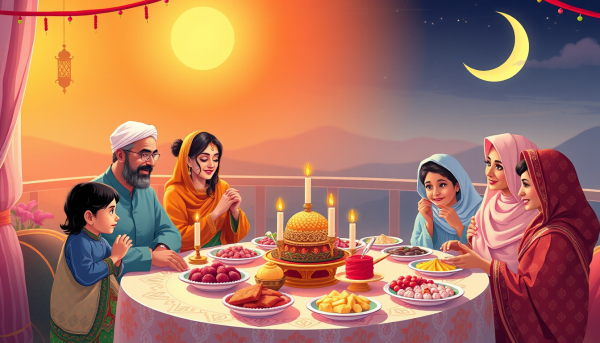
- Comidas festivas: Comparte la tradición de preparar y compartir comidas especiales con familiares y amigos. Incluso puedes cocinar platos tradicionales juntos, alentando a los niños a aprender sobre la importancia cultural de cada platillo.
- Regalos y ropa nueva: Habla sobre la alegría de dar y recibir regalos, así como sobre la tradición de usar ropa nueva para la ocasión.
3. Actividades creativas
Involucrar a los niños a través de actividades creativas puede enriquecer su comprensión y apreciación del Eid:
- Artes y manualidades: Crea tarjetas de felicitación para el Eid o decoraciones. Anima a los niños a expresar sus sentimientos sobre el festival a través del arte.
- Narración de cuentos: Comparte historias de la historia islámica relacionadas con el Eid. Las historias sobre el Profeta Muhammad y sus enseñanzas pueden inculcar importantes lecciones morales.
- Juego de roles: Organiza una celebración ficticia del Eid donde los niños puedan representar diferentes actividades, como prepararse para la oración, distribuir alimentos o ayudar a los demás.
4. Implicación comunitaria
Anima a los niños a participar en eventos comunitarios relacionados con el Eid:
- Ferias del Eid: Asiste a ferias o festivales locales del Eid donde puedan experimentar la diversidad cultural de las celebraciones islámicas.
- Voluntariado: Involúcralos en actividades de voluntariado, como servir comida a los necesitados o participar en limpiezas comunitarias. Esto les enseña la importancia de ayudar a los demás.
5. Reflexión y gratitud
El Eid es un momento perfecto para que los niños reflexionen sobre sus bendiciones. Anímales a:
- Hacer una lista de gratitud: Pídeles que escriban las cosas por las que están agradecidos y discútanlas en familia.
- Compartir sus bendiciones: Enséñales a compartir su buena fortuna con quienes tienen menos, enfatizando la empatía y la compasión.
Conclusión
Enseñar a los niños sobre festivales islámicos como el Eid puede ser una experiencia alegre y enriquecedora. Al compartir la importancia de estas ocasiones y al involucrarlos en diversas tradiciones y actividades, les ayudas a cultivar una comprensión más profunda de su fe y sus valores. En última instancia, estas lecciones fomentan un sentido de pertenencia, comunidad y compasión que puede durar toda la vida. Aprovecha esta oportunidad para celebrar no solo las festividades, sino también las enseñanzas fundamentales del islam que promueven el amor, la bondad y la unidad.
1. Understanding the Significance of Eid
Start by explaining the significance of Eid to your children. You can discuss:
- Eid al-Fitr: This festival symbolizes the joy and gratitude for the strength shown during Ramadan. It is a time to celebrate the completion of a month of fasting, prayer, and reflection.
- Eid al-Adha: This festival teaches the values of sacrifice and obedience. It commemorates Ibrahim’s faith in God and highlights the importance of charity.
2. Exploring Traditions and Customs
Introduce children to the various customs associated with Eid. These can vary widely between cultures, but here are some common traditions:
- Prayer: Explain the significance of the special prayers held in mosques or open spaces. Encourage children to participate in these prayers, explaining their meaning.
- Zakat (Charity): Discuss the importance of giving to those in need, particularly during Eid. Teach kids about Zakat al-Fitr, which is given to help the less fortunate before the Eid prayer.
- Festive Meals: Share the tradition of preparing and sharing special meals with family and friends. You might even cook traditional dishes together, encouraging children to learn about the cultural significance of each dish.
- Gifts and New Clothes: Talk about the joy of giving and receiving gifts, as well as the tradition of wearing new clothes for the occasion.
3. Creative Activities
Engaging children through creative activities can enhance their understanding and appreciation of Eid:
- Arts and Crafts: Create Eid greeting cards or decorations. Encourage children to express their feelings about the festival through art.
- Storytelling: Share stories from Islamic history related to Eid. Stories about the Prophet Muhammad and his teachings can instill important moral lessons.
- Role-Playing: Set up a mock Eid celebration where children can role-play various activities, such as preparing for the prayer, distributing food, or helping others.
4. Community Involvement
Encourage children to participate in community events related to Eid:
- Eid Fairs: Attend local Eid fairs or festivals where they can experience the cultural diversity of Islamic celebrations.
- Volunteering: Involve them in volunteer activities, such as serving food to the needy or participating in community clean-ups. This teaches them the importance of helping others.
5. Reflection and Gratitude
Eid is a perfect time for children to reflect on their blessings. Encourage them to:
- Make a Gratitude List: Have them write down things they are thankful for and discuss them as a family.
- Share Their Blessings: Teach them to share their good fortune with those less fortunate, emphasizing empathy and compassion.
Conclusion
Teaching kids about Islamic festivals like Eid can be a joyful and enriching experience. By sharing the significance of these occasions and involving them in various traditions and activities, you help cultivate a deeper understanding of their faith and its values. Ultimately, these lessons foster a sense of belonging, community, and compassion that can last a lifetime. Embrace this opportunity to celebrate not just the festivities, but the core teachings of Islam that promote love, kindness, and unity.