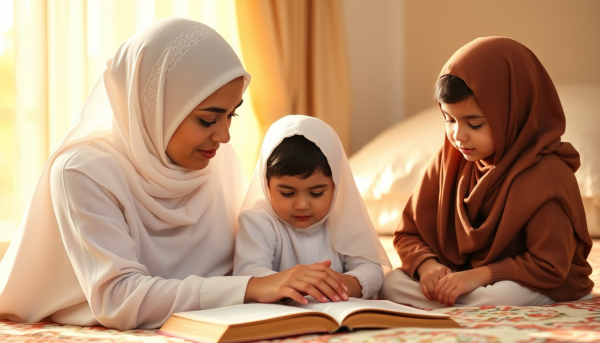
1. Comienza con lo Básico: Introducción a la Fe
Antes de adentrarte en los ritos, asegúrate de que tus hijos comprendan los conceptos básicos del Islam: la creencia en Allah, Sus mensajeros, el Corán y los pilares del Islam. Estos son los conceptos fundamentales que harán que los ritos tengan más significado para ellos. Lee historias islámicas sencillas, introduce las súplicas diarias y haz que las discusiones sobre la fe formen parte de la vida cotidiana.
2. Las Cinco Oraciones Diarias (Salah)
Enseñar la oración es uno de los aspectos más importantes de la educación de los niños musulmanes. Comienza familiarizándolos con los horarios de oración y los diferentes pasos involucrados. Aquí tienes algunos consejos:
- Modelar el Comportamiento: Los niños aprenden mejor observando. Ora frente a ellos, explicando lo que haces y por qué. Con el tiempo, anímales a que se unan a ti.
- Usar Ayudas Visuales: Utiliza gráficos de oración, aplicaciones o videos diseñados para niños para hacer que el proceso de aprendizaje sea interactivo.
- Crear una Rutina: Integra los momentos de oración en tu rutina familiar, para que se conviertan en una parte natural de su día.
- Practicar la Paciencia: Es posible que los niños no comprendan todo de inmediato. Mantén un ambiente positivo y ligero, y anímales incluso si cometen errores.
3. Wudu (Abluciones)
El wudu es un requisito esencial para la oración, y enseñarlo a los niños puede ser divertido y práctico:
- Divídelo en Pasos: Enséñales los pasos uno por uno. Para los niños más pequeños, conviértelo en una actividad divertida, salpicando agua suavemente y mostrándoles cómo se hace.
- Practiquen Juntos: Hagan wudu juntos antes de la oración, animándolos a imitarte.
- Explica su Importancia: Ayúdales a entender que el wudu no es solo un acto físico, sino también una forma de purificación espiritual.
4. Recitar y Memorizar el Corán
El Corán ocupa un lugar central en la vida de un musulmán, y la exposición temprana a su recitación es crucial:
- Empieza con Suras Cortas: Comienza con suras simples y cortas como Al-Fatiha, Al-Ikhlas y An-Nas. Recítalas en voz alta todos los días y anima a tus hijos a repetir después de ti.
- Dedica un Tiempo Especial: Reserva unos minutos cada día para la recitación del Corán. Haz de esto un momento sereno y placentero del día.
- Recompensa el Progreso: Celebra sus logros, ya sea memorizar un nuevo verso o mejorar la pronunciación, para mantenerlos motivados.
5. El Ayuno (Sawm)
El ayuno durante el Ramadán es uno de los cinco pilares del Islam y puede ser introducido a los niños gradualmente:
- Empieza con Pequeños Pasos: Para los niños más pequeños, permíteles experimentar el ayuno parcial durante unas pocas horas, o participen retrasando las comidas.
- Explica su Propósito: Ayúdales a entender que el ayuno no se trata solo de abstenerse de la comida, sino también de desarrollar empatía por los demás y acercarse a Allah.
- Celebren Juntos: Crea tradiciones familiares en torno al Ramadán, como decorar la casa, preparar juntos las comidas del iftar y participar en oraciones adicionales.
6. Caridad (Zakat y Sadaqah)
Involucra a tus hijos en la caridad, ya sea a través del Zakat (caridad obligatoria) o Sadaqah (caridad voluntaria). Enséñales la alegría de compartir y ayudar a los necesitados:
- Sé un Ejemplo: Muéstrales cuando des, y permíteles contribuir con sus propios ahorros, aunque sea una pequeña cantidad.
- Hazlo Práctico: Anímales a donar juguetes, ropa u otras pertenencias que ya no necesiten.
- Enseña Gratitud: Habla con tus hijos sobre por qué damos y cómo debemos estar agradecidos por las bendiciones que Allah nos ha otorgado.
7. Hajj y Umrah
Aunque los niños no realicen el Hajj o Umrah a una edad temprana, es importante que se familiaricen con estos ritos:
- Usa Historias y Visuales: Explica el viaje del Hajj y la historia del profeta Ibrahim (AS) de manera simplificada. Usa videos o libros para niños que les ayuden a visualizar.
- Jugar a Representar en Casa: Puedes hacer que representen algunos aspectos del Hajj en casa para que sea interactivo. Por ejemplo, dar vueltas alrededor de una "Kaaba" de cartón o recrear el lanzamiento de piedras.
8. Celebrar las Ocasiones Islámicas
Las ocasiones islámicas especiales como el Eid al-Fitr, Eid al-Adha y la Noche del Decreto (Laylat al-Qadr) son momentos maravillosos para reforzar las enseñanzas islámicas:
- Crea Tradiciones: Haz que estos días sean memorables preparando comidas especiales, intercambiando regalos y decorando la casa.
- Involucra a los Niños en los Ritos: Permíteles participar en la oración del Eid, distribuir caridad y compartir con la familia y amigos.
9. La Constancia es la Clave
La constancia en la práctica y enseñanza de los ritos islámicos fomentará una conexión más profunda con la fe en tus hijos. Incorpora prácticas islámicas diarias y semanales en tu rutina, como sesiones de dhikr en familia o leer hadices juntos.
10. Hazlo Positivo y Atractivo
Los niños son más propensos a abrazar los ritos cuando se les presentan de manera positiva y atractiva. Evita hacer que los ritos parezcan tareas. En su lugar, inspírales amor por el Islam compartiendo historias de los profetas, discutiendo la belleza de la adoración y celebrando los momentos en que muestran interés o hacen progreso.
Reflexiones Finales
Enseñar los ritos islámicos en casa es un viaje de toda la vida que ayuda a moldear la identidad espiritual de tu hijo. Al ser paciente, constante y amoroso, crearás un ambiente donde se sientan conectados con su fe, listos para llevar adelante las lecciones y valores que les has inculcado. Lo más importante, haz du'a por tus hijos y confía en que Allah los guiará por el camino correcto.
Al fomentar esta base, no solo les estás enseñando ritos, sino que los estás guiando a convertirse en musulmanes conscientes, compasivos y devotos que viven su fe con amor y sinceridad.
1. Begin with the Basics: Introducing Faith
Before diving into rituals, ensure that your children understand the basic tenets of Islam—belief in Allah, His messengers, the Qur'an, and the pillars of Islam. These are the core concepts that will make rituals more meaningful to them. Read simple Islamic stories, introduce them to daily supplications, and make discussions about faith a natural part of daily life.
2. The Five Daily Prayers (Salah)
Teaching prayer is one of the most important aspects of raising Muslim children. Start by familiarizing them with the prayer times and the different steps involved. Here are a few tips:
- Model the Behavior: Children learn best by observing. Pray in front of them, explaining what you are doing and why. Over time, encourage them to join you.
- Use Visual Aids: Utilize prayer charts, apps, or videos designed for kids to make the learning process interactive.
- Create a Routine: Integrate prayer times into your family routine, so it becomes a natural part of their day.
- Practice Patience: Children may not grasp everything at once. Keep the atmosphere light and positive, encouraging them even if they make mistakes.
3. Wudu (Ablution)
Wudu is an essential prerequisite to prayer, and teaching it to children can be fun and hands-on:
- Break it Down: Teach them the steps one by one. For younger children, turn it into a fun activity by splashing water gently and showing how it's done.
- Practice Together: Make wudu together before prayer, encouraging them to mimic you.
- Explain Its Importance: Help them understand that wudu is not just a physical act but also a way of spiritually purifying oneself.
4. Reciting and Memorizing the Qur'an
The Qur'an holds a central place in a Muslim’s life, and early exposure to its recitation is crucial:
- Start with Short Surahs: Begin with simple, short surahs like Al-Fatiha, Al-Ikhlas, and An-Nas. Recite them aloud daily and encourage your children to repeat after you.
- Set Aside a Special Time: Dedicate a few minutes each day for Qur'an recitation. Make it a serene and joyful part of the day.
- Reward Progress: Celebrate their milestones, whether it's memorizing a new verse or improving pronunciation, to keep them motivated.
5. Fasting (Sawm)
Fasting during Ramadan is one of the Five Pillars of Islam and can be introduced to children gradually:
- Start Small: For younger children, let them experience partial fasting for a few hours, or participate by delaying meals.
- Explain Its Purpose: Help them understand that fasting is not only about abstaining from food but also a way to develop empathy for others and get closer to Allah.
- Celebrate Together: Create family traditions around Ramadan, such as decorating the home, preparing iftar meals together, and engaging in extra prayers.
6. Charity (Zakat and Sadaqah)
Involve your children in giving, whether it's Zakat (mandatory charity) or Sadaqah (voluntary charity). Teach them the joy of sharing and helping those in need:
- Set an Example: Show them when you give, and let them contribute from their own savings, even if it's just a small amount.
- Make It Practical: Encourage them to donate toys, clothes, or other belongings they no longer need.
- Teach Gratitude: Discuss with your children why we give and how we should be grateful for what Allah has blessed us with.
7. Hajj and Umrah
While children may not perform Hajj or Umrah at a young age, it's important to familiarize them with these rituals:
- Use Stories and Visuals: Explain the journey of Hajj and the story of Prophet Ibrahim (AS) in a simplified manner. Use videos or children’s books to help them visualize.
- Role-play at Home: You can pretend to perform some aspects of Hajj at home by making it interactive. For example, circle around a "Kaaba" made from cardboard or reenact the throwing of pebbles.
8. Celebrate Islamic Occasions
Special Islamic occasions like Eid ul-Fitr, Eid ul-Adha, and the Night of Qadr are wonderful times to reinforce Islamic teachings:
- Create Traditions: Make these days memorable by having special meals, giving gifts, and decorating the house.
- Involve Children in Rituals: Let them participate in the Eid prayer, distributing charity, and sharing with family and friends.
9. Consistency is Key
Consistency in practicing and teaching Islamic rituals will foster a deeper connection to faith in your children. Incorporate daily and weekly Islamic practices into your routine, such as family dhikr sessions or reading Hadith together.
10. Keep It Positive and Engaging
Children are more likely to embrace rituals when they are introduced in a positive, engaging manner. Avoid making rituals feel like chores. Instead, inspire their love for Islam by sharing stories of the Prophets, discussing the beauty of worship, and celebrating the moments when they show interest or make progress.
Final Thoughts
Teaching Islamic rituals at home is a lifelong journey that helps shape your child’s spiritual identity. By being patient, consistent, and loving, you will create an atmosphere where they feel connected to their faith, ready to carry forward the lessons and values you have imparted. Above all, make dua for your children and trust that Allah will guide them on the right path.
By fostering this foundation, you're not just teaching them rituals, but guiding them toward becoming mindful, compassionate, and devout Muslims who live their faith with love and sincerity.