1. El nacimiento del Profeta Muhammad (570 d.C.)
El Profeta Muhammad, el último mensajero del islam, nació en La Meca en 570 d.C. Su vida temprana estuvo marcada por la honestidad y la integridad, ganándose el título de "Al-Amin” (el digno de confianza). Comprender su vida temprana ayuda a los niños a apreciar cualidades como la amabilidad y la honestidad.
2. La primera revelación (610 d.C.)
A la edad de 40 años, Muhammad recibió su primera revelación del Ángel Gabriel mientras meditaba en la Cueva de Hira. Este evento marca el comienzo de su profecía y de la revelación del Corán. Los niños deberían aprender sobre este momento para entender la importancia del Corán como guía para los musulmanes.
3. La Hégira (622 d.C.)
La Hégira, o migración de La Meca a Medina, es un evento fundamental en la historia islámica. Al enfrentarse a la persecución en La Meca, Muhammad y sus seguidores se trasladaron a Medina, donde establecieron una comunidad basada en los principios islámicos. La Hégira marca el inicio del calendario islámico y ilustra la importancia de la comunidad y la perseverancia.
4. La batalla de Badr (624 d.C.)
La batalla de Badr fue una batalla significativa entre los musulmanes de Medina y la tribu de los Quraysh de La Meca. A pesar de estar en desventaja numérica, los musulmanes ganaron la batalla, lo que fortaleció su posición y fe. Este evento enseña a los niños sobre el coraje, el trabajo en equipo y la importancia de la fe para superar desafíos.
5. El tratado de Hudaybiyyah (628 d.C.)
Este tratado fue un acuerdo entre los musulmanes y los Quraysh que permitió a los musulmanes regresar a La Meca para realizar un peregrinaje. Aunque al principio pareció desfavorable, finalmente condujo a la difusión del islam. Este evento muestra la importancia de la paciencia y la diplomacia en la resolución de conflictos.
6. La conquista de La Meca (630 d.C.)
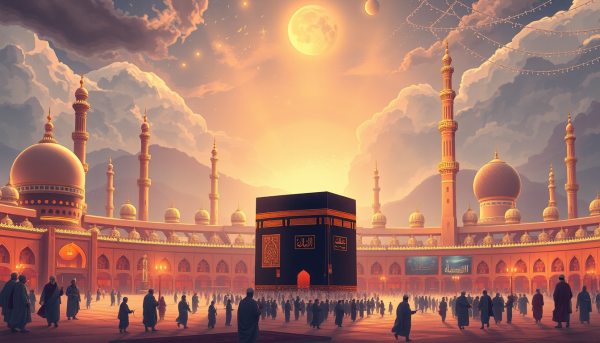
La conquista pacífica de La Meca fue un punto de inflexión importante en la historia islámica. Al entrar en la ciudad, Muhammad perdonó a muchos de sus antiguos enemigos y purificó la Kaaba de ídolos, estableciéndola como un centro de monoteísmo. Esto enseña a los niños sobre el perdón, la humildad y la importancia de la fe.
7. El peregrinaje de despedida (632 d.C.)
En el último año de su vida, Muhammad realizó el Hajj y pronunció su Sermón de Despedida, enfatizando la igualdad, la justicia y la responsabilidad comunitaria. Este evento resalta la importancia del Hajj y los valores fundamentales del islam que promueven el respeto y la unidad.
8. La expansión del islam
Tras la muerte de Muhammad, el islam se expandió rápidamente por el Medio Oriente, el norte de África y más allá, llegando a partes de Europa y Asia. Esta expansión fue facilitada por el comercio, la erudición y los intercambios culturales. Comprender este crecimiento ayuda a los niños a apreciar las diversas culturas dentro del mundo islámico.
9. La Edad de Oro del islam (del siglo VIII al XIV)
Durante este período, el mundo islámico logró importantes avances en ciencia, matemáticas, medicina y literatura. Eruditos como Al-Juarismi e Ibn Sina hicieron grandes contribuciones al conocimiento humano. Esta época enseña a los niños sobre la importancia del aprendizaje, la curiosidad y las contribuciones a la sociedad.
10. La caída del Imperio Otomano (1922)
El final del Imperio Otomano marcó cambios significativos en el mundo islámico y condujo al establecimiento de estados modernos. Este evento recuerda a los niños las influencias de la historia en la política y las sociedades contemporáneas.
Conclusión
Estos eventos son solo un vistazo a la rica tapicería de la historia islámica. Enseñar a los niños sobre estos momentos clave puede ayudarles a comprender su identidad, apreciar la diversidad y reconocer los valores que son fundamentales para el islam. Al aprender sobre el pasado, los niños pueden construir un futuro más inclusivo basado en el respeto y la comprensión.
1. The Birth of Prophet Muhammad (570 CE)
Prophet Muhammad, the last messenger of Islam, was born in Mecca in 570 CE. His early life was marked by honesty and integrity, earning him the title "Al-Amin” (the trustworthy). Understanding his early life helps children appreciate the qualities of kindness and honesty.
2. The First Revelation (610 CE)
At the age of 40, Muhammad received his first revelation from the Angel Gabriel while meditating in the Cave of Hira. This event marks the beginning of his prophethood and the revelation of the Quran. Children should learn about this moment to understand the significance of the Quran as a guide for Muslims.
3. The Hijra (622 CE)
The Hijra, or migration from Mecca to Medina, is a pivotal event in Islamic history. Facing persecution in Mecca, Muhammad and his followers moved to Medina, where they established a community based on Islamic principles. The Hijra marks the beginning of the Islamic calendar and illustrates the importance of community and perseverance.
4. The Battle of Badr (624 CE)
The Battle of Badr was a significant early battle between the Muslims of Medina and the Quraysh tribe of Mecca. Despite being outnumbered, the Muslims won the battle, which strengthened their position and faith. This event teaches children about courage, teamwork, and the importance of faith in overcoming challenges.
5. The Treaty of Hudaybiyyah (628 CE)
This treaty was an agreement between the Muslims and the Quraysh, allowing Muslims to return to Mecca for pilgrimage. Although it seemed unfavorable at first, it ultimately led to the spread of Islam. This event shows the importance of patience and diplomacy in resolving conflicts.
6. The Conquest of Mecca (630 CE)
The peaceful conquest of Mecca was a significant turning point in Islamic history. Upon entering the city, Muhammad forgave many of his former enemies and cleansed the Kaaba of idols, establishing it as a center of monotheism. This teaches children about forgiveness, humility, and the importance of faith.
7. The Farewell Pilgrimage (632 CE)
In the final year of his life, Muhammad performed the Hajj pilgrimage and delivered his Farewell Sermon, emphasizing equality, justice, and community responsibility. This event highlights the importance of the Hajj pilgrimage and the core values of Islam that promote respect and unity.
8. The Spread of Islam
Following the death of Muhammad, Islam spread rapidly across the Middle East, North Africa, and beyond, reaching parts of Europe and Asia. This expansion was facilitated by trade, scholarship, and cultural exchanges. Understanding this growth helps children appreciate the diverse cultures within the Islamic world.
9. The Golden Age of Islam (8th to 14th Century)
During this period, the Islamic world made significant advancements in science, mathematics, medicine, and literature. Scholars like Al-Khwarizmi and Ibn Sina contributed greatly to human knowledge. This era teaches children about the importance of learning, curiosity, and contributions to society.
10. The Fall of the Ottoman Empire (1922)
The end of the Ottoman Empire marked significant changes in the Islamic world and led to the establishment of modern nation-states. This event reminds children about the impacts of history on present-day politics and societies.
Conclusion
These events are just a glimpse into the rich tapestry of Islamic history. Teaching children about these pivotal moments can help them understand their identity, appreciate diversity, and recognize the values that are integral to Islam. By learning about the past, children can build a more inclusive future grounded in respect and understanding.