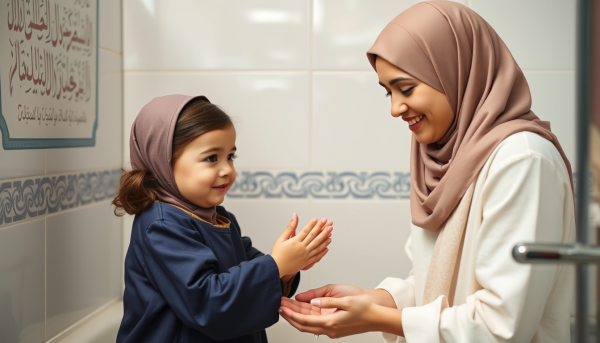
1. Predique con el Ejemplo
Los niños aprenden observando a sus padres. Practicar lo que predica es una de las formas más efectivas de enseñarles. Participe en las oraciones diarias, muestre amabilidad, demuestre honestidad y exprese compasión hacia los demás. Su comportamiento servirá como un modelo para sus hijos, alentándolos a adoptar actitudes similares.
2. Enseñe las Bases del Islam Temprano
Introduzca las enseñanzas fundamentales del Islam de manera atractiva y apropiada para su edad. Comience explicando los Cinco Pilares del Islam y las historias de los Profetas, enfatizando su relevancia en la vida cotidiana. Utilice libros, videos y actividades interactivas para hacer que el aprendizaje sea divertido y significativo. El objetivo es hacer que las enseñanzas islámicas sean comprensibles para que los niños puedan entender su importancia.
3. Fomente la Oración Regular (Salah)
Incorporar la oración en la rutina diaria de su hijo es crucial. Comience animándolos a unirse a usted para las cinco oraciones diarias, incluso si solo se trata de las oraciones obligatorias al principio. Cree un área de oración designada en su hogar donde puedan orar cómodamente. Enséñeles la importancia de la Salah y explique sus beneficios, como la tranquilidad, la disciplina y la conexión con Allah.
4. Utilice Historias del Corán y Hadices
Las enseñanzas islámicas están llenas de historias que transmiten lecciones morales. Comparta historias del Corán y de los Hadices que resalten valores como la honestidad, la paciencia y la generosidad. Discuta los personajes y las decisiones que tomaron, enfatizando las virtudes que se pueden aprender de sus experiencias. La narración puede cautivar la atención de los niños mientras les enseña lecciones importantes sobre su fe.
5. Promueva un Buen Carácter (Akhlaq)
El buen carácter es un pilar del Islam. Enseñe a sus hijos la importancia de los buenos modales, el respeto por los mayores, la amabilidad hacia sus compañeros y la empatía hacia todos los seres vivos. Refuerce la idea de que cada acción debe reflejar las enseñanzas islámicas. Reconozca y elogie su comportamiento positivo para alentarlos a seguir mostrando un buen carácter.
6. Involúcrelos en Actividades Comunitarias
La participación en la comunidad puede reforzar los valores islámicos. Involucre a sus hijos en actividades en su mezquita local, como el voluntariado, la asistencia a clases islámicas o la participación en proyectos de servicio comunitario. Esta implicación no solo fortalece su comprensión del Islam, sino que también les ayuda a desarrollar un sentido de pertenencia dentro de la comunidad musulmana.
7. Enseñe la Importancia de la Caridad (Zakat)
Introduzca el concepto de caridad y generosidad desde una edad temprana. Explique la importancia de retribuir a la comunidad y ayudar a los necesitados. Anímeles a apartar una parte de su mesada para contribuciones benéficas o a participar en actividades de recaudación de fondos. Al fomentar un espíritu de generosidad, los ayuda a desarrollar empatía y un sentido de responsabilidad hacia los demás.
8. Fomente Discusiones Abiertas sobre la Fe
Cree un espacio seguro para que sus hijos hagan preguntas sobre el Islam y expresen sus pensamientos. Fomente discusiones abiertas donde puedan compartir su comprensión, dudas o preocupaciones. Este enfoque fomenta una relación saludable con su fe y les ayuda a buscar conocimiento y comprensión de manera independiente.
9. Integre las Enseñanzas Islámicas en la Vida Diaria
Haga que las enseñanzas islámicas sean una parte natural de la vida diaria de su familia. Utilice oportunidades en situaciones cotidianas para reforzar los valores islámicos. Por ejemplo, durante las comidas, recuérdeles la importancia de decir "Bismillah" (en el nombre de Allah) y expresar gratitud. Use frases islámicas en las conversaciones diarias para crear una integración fluida de la fe en sus vidas.
10. Sea Paciente y Solidario
Instilar valores es un proceso gradual que requiere paciencia. Los niños enfrentarán desafíos y pueden cuestionar sus creencias a medida que crezcan. Sea solidario y comprensivo, y guíelos con amor y cuidado. Celebre sus progresos y ofrézcales apoyo, permitiéndoles explorar su fe a su propio ritmo.
Conclusión
Nutrir los valores islámicos en los niños desde una edad temprana establece una base sólida para su desarrollo moral y espiritual. Al predicar con el ejemplo, enseñarles los fundamentos del Islam y crear un entorno de apoyo, los padres pueden instilar un compromiso de por vida con su fe. Recuerde, el objetivo es cultivar un amor genuino por el Islam, asegurando que los niños crezcan para convertirse en individuos compasivos, responsables y fieles.
Formal study and home life pull in the same direction here. The Islamic sciences, what most people call Islamic studies, give a child the reasons; the habits below are how those reasons are lived.
1. Lead by Example
Children learn by observing their parents. Demonstrating Islamic values through your actions is one of the most effective ways to teach them. Practice what you preach—engage in daily prayers, show kindness, exhibit honesty, and demonstrate compassion toward others. Your behavior will serve as a model for your children, encouraging them to adopt similar attitudes.
2. Teach the Basics of Islam Early On
Introduce the fundamental teachings of Islam in a way that is engaging and age-appropriate. Start with the Five Pillars of Islam and the stories of the Prophets, emphasizing their relevance in everyday life. Use books, videos, and interactive activities to make learning fun and meaningful. The goal is to make Islamic teachings relatable so that children can understand their significance.
3. Encourage Regular Prayer (Salah)
Incorporating prayer into your child’s daily routine is crucial. Start by encouraging them to join you for the five daily prayers, even if it’s just the Fard prayers at first. Create a designated prayer area in your home where they can pray comfortably. Teach them the importance of Salah and explain its benefits, such as tranquility, discipline, and connection to Allah.
4. Use Stories from the Qur'an and Hadith
Islamic teachings are rich with stories that impart moral lessons. Share stories from the Qur'an and Hadith that highlight values such as honesty, patience, and generosity. Discuss the characters and the decisions they made, emphasizing the virtues that can be learned from their experiences. Storytelling can captivate children's attention while imparting important lessons about their faith.
5. Promote Good Character (Akhlaq)
Good character is a cornerstone of Islam. Teach your children the importance of good manners, respect for elders, kindness to peers, and empathy towards all living beings. Reinforce the idea that every action should reflect Islamic teachings. Acknowledge and praise their positive behavior to encourage them to continue exhibiting good character.
6. Involve Them in Community Activities
Engagement in the community can reinforce Islamic values. Involve your children in activities at your local mosque, such as volunteering, attending Islamic classes, or participating in community service projects. This involvement not only strengthens their understanding of Islam but also helps them build a sense of belonging within the Muslim community.
7. Teach the Importance of Charity (Zakat)
Introduce the concept of charity and generosity from a young age. Explain the significance of giving back to the community and helping those in need. Encourage them to set aside a portion of their allowance for charitable contributions or to participate in fundraising activities. By fostering a spirit of generosity, you help them develop empathy and a sense of responsibility toward others.
8. Encourage Open Discussions about Faith
Create a safe space for your children to ask questions about Islam and express their thoughts. Encourage open discussions where they can share their understanding, doubts, or concerns. This approach fosters a healthy relationship with their faith and helps them seek knowledge and understanding independently.
9. Integrate Islamic Teachings into Daily Life
Make Islamic teachings a natural part of your family’s daily life. Use opportunities in everyday situations to reinforce Islamic values. For example, during meals, remind them of the importance of saying "Bismillah” (in the name of Allah) and expressing gratitude. Use Islamic phrases in daily conversations to create a seamless integration of faith into their lives.
10. Be Patient and Supportive
Instilling values is a gradual process that requires patience. Children will face challenges and may question their beliefs as they grow. Be supportive and understanding, and guide them with love and care. Celebrate their progress and provide reassurance, allowing them to explore their faith at their own pace.
Conclusion
Nurturing Islamic values in children from a young age lays a solid foundation for their moral and spiritual development. By leading by example, teaching them the fundamentals of Islam, and creating a supportive environment, parents can instill a lifelong commitment to their faith. Remember, the goal is to cultivate a genuine love for Islam, ensuring that children grow into compassionate, responsible, and faithful individuals.