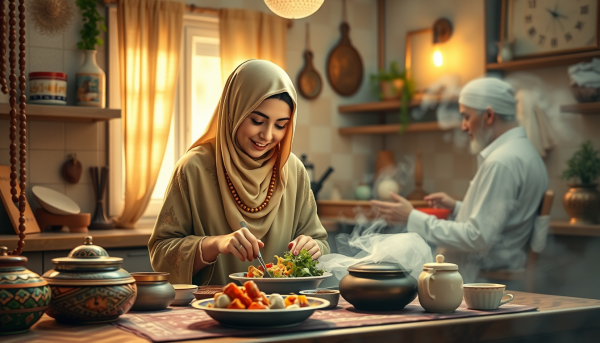
Was ist Halal?
Das Wort „Halal“ bedeutet auf Arabisch „erlaubt“ oder „zulässig“. Es bezieht sich auf Handlungen oder Dinge, die nach dem islamischen Recht erlaubt sind, basierend auf dem Qur'an und den Hadithen (den Aussprüchen und Handlungen des Propheten Muhammad). Im Kontext von Lebensmitteln bezeichnet Halal Lebensmittel, die zum Verzehr erlaubt sind. Der Umfang von Halal geht jedoch über Lebensmittel hinaus und umfasst alle Handlungen und Verhaltensweisen im Leben, einschließlich Finanzen, Geschäftsbeziehungen und Sozialverhalten.
Beispiele für Halal:
- Lebensmittel: Fleisch von Tieren, die nach islamischen Vorschriften geschlachtet wurden, Obst, Gemüse und Getreide.
- Verhalten: Ehrlichkeit im Umgang, Freundlichkeit gegenüber anderen und das Verrichten religiöser Handlungen.
- Finanzen: Handel oder finanzielle Praktiken betreiben, die keinen Zins (Wucher) beinhalten, da zinsbasierte Geschäfte im Islam verboten sind.
Was ist Haram?
„Haram“ bedeutet „verboten“ oder „untersagt“. Alles, was als Haram gilt, ist nach dem islamischen Recht nicht erlaubt, und Muslime werden ermutigt, solche Handlungen zu vermeiden. Wie beim Halal gilt Haram auch in vielen Lebensbereichen, einschließlich Nahrung, Getränken, Verhalten und Geschäftlichem.
Beispiele für Haram:
- Lebensmittel: Schweinefleisch und seine Derivate, Alkohol und Tiere, die nicht nach islamischen Regeln geschlachtet wurden.
- Verhalten: Stehlen, Lügen und anderen Schaden zufügen gelten als sündhafte Handlungen.
- Finanzen: Zinsen verlangen oder zahlen, Glücksspiel oder unehrliche Geschäftspraktiken.
Halal und Haram bei Lebensmitteln
Eine der bekanntesten Anwendungen von Halal und Haram ist in der Lebensmittelindustrie. Muslime sind verpflichtet, Halal-Lebensmittel zu konsumieren, was bedeutet, dass sie sicherstellen müssen, dass die Lebensmittel, die sie essen, den islamischen Speisegesetzen entsprechen.
Wichtige Richtlinien für Halal-Lebensmittel sind:
- Richtige Schlachtung: Tiere müssen von einem Muslim geschlachtet werden, und vor der Schlachtung sollte der Name Gottes (Allah) ausgesprochen werden.
Das Tier sollte gesund sein und menschlich behandelt werden.
- Verbot bestimmter Tiere: Schweine, Fleischfresser und bestimmte Vogelarten gelten als Haram und dürfen nicht gegessen werden.
- Vermeidung von Rauschmitteln: Alkohol und alle berauschenden Substanzen sind streng verboten.
In der modernen Gesellschaft ist die Nachfrage nach Halal-zertifizierten Produkten gestiegen, wodurch es Muslimen leichter fällt, erlaubte Lebensmittel in Restaurants und Supermärkten zu finden. Viele Unternehmen bieten inzwischen Halal-Optionen an, um muslimische Verbraucher zu bedienen.
Über die Nahrung hinaus: Halal und Haram in anderen Lebensbereichen
Die Grundsätze von Halal und Haram gelten auch für andere Lebensbereiche über die Ernährungsbestimmungen hinaus:
-
Wirtschaft und Finanzen: Im Islam sind ethische Geschäftspraktiken entscheidend. Halal-Finanzwesen umfasst Handel und Geschäfte, die andere nicht ausbeuten oder Zinsen (riba) beinhalten. Muslime werden dazu ermutigt, fairen Handel, Transparenz und Ehrlichkeit zu praktizieren. Haram-Finanzpraktiken, wie Glücksspiel (maysir) oder Zinsgeschäfte, sind verboten, weil sie als ausbeuterisch und ungerecht gelten.
-
Soziales Verhalten: Halal-Verhalten im sozialen Umfeld bedeutet, andere mit Respekt, Freundlichkeit und Fairness zu behandeln. Haram-Verhalten, wie Lügen, üble Nachrede oder das Zufügen von Schaden, wird missbilligt. Der Islam fördert einen moralischen Rahmen, in dem die Rechte und die Würde des Einzelnen geschützt werden.
-
Kleidung: Das Konzept der Bescheidenheit in der Kleidung ist eine weitere Anwendung von Halal und Haram. Der Islam fördert bescheidene Kleidung für Männer und Frauen, die Werte wie Demut und Selbstachtung widerspiegelt. Kleidung, die übermäßig freizügig ist oder mit der Absicht getragen wird, ungebührliche Aufmerksamkeit zu erregen, kann als Haram angesehen werden.
Warum das Verständnis von Halal und Haram wichtig ist
Das Verständnis von Halal und Haram ist für Muslime entscheidend, da es ihnen ermöglicht, ein Leben im Einklang mit ihrem Glauben zu führen. Durch das Befolgen dieser Richtlinien streben sie spirituelle Erfüllung und ethisches Verhalten im Alltag an. Für Nicht-Muslime fördert das Bewusstsein für diese Konzepte Respekt und Verständnis, insbesondere in multikulturellen Gesellschaften, in denen Menschen verschiedener religiöser Hintergründe zusammenleben.
Darüber hinaus unterstreicht die Unterscheidung zwischen Halal und Haram den islamischen Schwerpunkt auf bewusstem Leben. Der Glaube ermutigt Muslime, kritisch über ihr Handeln, dessen Auswirkungen auf andere und ihre Beziehung zu Gott nachzudenken.
Dieses Bewusstsein führt zu Achtsamkeit bei Entscheidungen und stellt sicher, dass die Wahl sowohl mit moralischen als auch mit religiösen Werten übereinstimmt.
Häufige Missverständnisse
- Halal betrifft nur Lebensmittel: Während Halal oft mit Lebensmitteln assoziiert wird, gilt es für viele Lebensbereiche, einschließlich Finanzen, Verhalten und Kleidung.
- Halal-Lebensmittel sind nur für Muslime: Viele Menschen, unabhängig von ihrer Religion, wählen Halal-Lebensmittel wegen der ethischen Behandlung der Tiere und der Betonung von Sauberkeit.
- Fleisch ist automatisch Halal: Fleisch gilt nur dann als Halal, wenn es bestimmte Schlachtvorschriften erfüllt. Nicht jedes Fleisch im Supermarkt ist als Halal zu betrachten, selbst wenn es scheinbar frei von verbotenen Stoffen wie Schweinefleisch ist.
Fazit
Die Konzepte von Halal und Haram sind integraler Bestandteil des islamischen Lebens und beeinflussen nicht nur Ernährungsentscheidungen, sondern auch moralische, soziale und finanzielle Entscheidungen. Indem Muslime diese Prinzipien befolgen, streben sie danach, auf eine Weise zu leben, die Gott gefällt, und eine harmonische Gesellschaft zu fördern. Für Nicht-Muslime kann das Verständnis dieser Konzepte zu mehr Respekt und kulturellem Bewusstsein beitragen und die Inklusion in vielfältigen Gemeinschaften fördern.
In einer globalisierten Welt, in der Kulturen und Glaubensrichtungen aufeinandertreffen, kann das Anerkennen der Bedeutung von Halal und Haram zu einer empathischeren und informierteren Sichtweise auf die Werte führen, die das Leben von Millionen von Menschen weltweit prägen.
What is Halal?
The word "Halal" means "permissible" or "lawful" in Arabic. It refers to actions or things that are allowed according to Islamic law, based on the Qur'an and Hadith (the sayings and actions of the Prophet Muhammad). In the context of food, Halal refers to food items that are permissible for consumption. However, the scope of Halal goes beyond food and encompasses all actions and behaviors in life, including finance, business transactions, and social behavior.
Examples of Halal:
- Food: Meat from animals slaughtered according to Islamic guidelines, fruits, vegetables, and grains.
- Behavior: Being honest in your dealings, showing kindness to others, and performing acts of worship.
- Finances: Engaging in trade or financial practices that do not involve interest (usury), as interest-based transactions are prohibited in Islam.
What is Haram?
"Haram" means "forbidden" or "prohibited." Anything considered Haram is not allowed under Islamic law, and Muslims are encouraged to avoid such actions. Just as with Halal, Haram also applies to many areas of life, including food, drink, behavior, and business.
Examples of Haram:
- Food: Pork and its derivatives, alcohol, and animals not slaughtered according to Islamic rules.
- Behavior: Stealing, lying, and harming others are considered sinful acts.
- Finances: Charging or paying interest, gambling, or engaging in dishonest business practices.
Halal and Haram in Food
One of the most well-known applications of Halal and Haram is in the food industry. Muslims are required to consume Halal food, which means they must ensure that the food they eat meets Islamic dietary laws.
Key guidelines for Halal food include:
- Proper slaughter: Animals must be slaughtered by a Muslim, and the name of God (Allah) should be invoked before the slaughter. The animal should be healthy and treated humanely.
- Prohibition of certain animals: Pigs, carnivorous animals, and certain birds are considered Haram and must not be eaten.
- Avoiding intoxicants: Alcohol and any intoxicating substances are strictly forbidden.
In modern society, the demand for Halal-certified products has increased, making it easier for Muslims to find permissible foods in restaurants and supermarkets. Many companies now offer Halal options to cater to Muslim consumers.
Beyond Food: Halal and Haram in Other Aspects of Life
The principles of Halal and Haram also apply to other aspects of life beyond dietary restrictions:
-
Business and Finance: In Islam, ethical business practices are crucial. Halal finance involves trade and commerce that do not exploit others or involve interest (riba). Muslims are encouraged to engage in fair trade, transparency, and honesty. Haram financial practices, such as gambling (maysir) or dealing with interest, are prohibited because they are seen as exploitative and unjust.
-
Social Conduct: Halal behavior in social settings involves treating others with respect, kindness, and fairness. Haram behavior, such as lying, backbiting, or causing harm, is discouraged. Islam promotes a moral framework where the rights and dignity of individuals are protected.
-
Clothing: The concept of modesty in clothing is another application of Halal and Haram. Islam encourages modest dress for both men and women, which reflects the values of humility and self-respect. Clothing that is overly revealing or worn with the intention of attracting undue attention may be considered Haram.
Why Understanding Halal and Haram Matters
Understanding Halal and Haram is crucial for Muslims as it allows them to lead a life that is in harmony with their faith. By following these guidelines, they seek to attain spiritual fulfillment and ethical conduct in everyday life. For non-Muslims, awareness of these concepts fosters respect and understanding, especially in multicultural societies where people from different religious backgrounds coexist.
Moreover, the distinction between Halal and Haram highlights the Islamic emphasis on conscious living. The faith encourages Muslims to think critically about their actions, their impact on others, and their relationship with God. This awareness leads to mindfulness in decision-making, ensuring that choices align with both moral and religious values.
Common Misconceptions
- Halal is only about food: While Halal is often associated with food, it applies to many areas of life, including finances, behavior, and clothing.
- Halal food is only for Muslims: Many people, regardless of religion, choose Halal food because of the ethical treatment of animals and the emphasis on cleanliness.
- All meat is automatically Halal: Meat is only considered Halal if it meets specific slaughtering guidelines. Not all meat in supermarkets qualifies as Halal, even if it seems to be free of prohibited substances like pork.
Conclusion
The concepts of Halal and Haram are integral to Islamic life, influencing not only dietary choices but also moral, social, and financial decisions. By adhering to these principles, Muslims seek to live in a way that pleases God and fosters a harmonious society. For non-Muslims, understanding these concepts can promote greater respect and cultural awareness, fostering inclusivity in diverse communities.
In a globalized world, where cultures and beliefs intersect, recognizing the significance of Halal and Haram can lead to a more empathetic and informed perspective on the values that shape the lives of millions of people around the world.