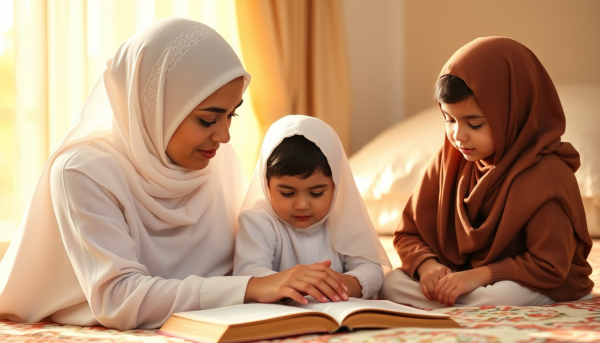
1. Inizia dalle basi: introdurre la fede
Prima di addentrarti nei rituali, assicurati che i tuoi figli comprendano i principi fondamentali dell'Islam—la fede in Allah, nei Suoi messaggeri, nel Corano e nei pilastri dell'Islam. Questi sono i concetti centrali che renderanno i rituali più significativi per loro. Leggi storie islamiche semplici, introducili alle suppliche quotidiane e fai sì che le discussioni sulla fede siano una parte naturale della vita di tutti i giorni.
2. Le cinque preghiere quotidiane (Salah)
Insegnare la preghiera è uno degli aspetti più importanti nell'educazione dei bambini musulmani. Inizia familiarizzandoli con gli orari della preghiera e i diversi passaggi coinvolti. Ecco alcuni consigli:
- Modella il comportamento: I bambini imparano meglio osservando. Prega davanti a loro, spiegando cosa stai facendo e perché. Col tempo, incoraggiali a unirsi a te.
- Usa ausili visivi: Utilizza schede della preghiera, app o video pensati per i bambini per rendere il processo di apprendimento interattivo.
- Crea una routine: Integra gli orari della preghiera nella routine familiare, così diventeranno una parte naturale della loro giornata.
- Abbi pazienza: I bambini potrebbero non capire tutto subito. Mantieni un'atmosfera leggera e positiva, incoraggiandoli anche se commettono errori.
3. Wudu (Abluzione)
Il wudu è un prerequisito essenziale per la preghiera, e insegnarlo ai bambini può essere divertente e pratico:
- Scomponilo: Insegnali i passaggi uno alla volta. Per i bambini più piccoli, trasformalo in un'attività divertente spruzzando l'acqua delicatamente e mostrando come si fa.
- Fate pratica insieme: Fate il wudu insieme prima della preghiera, incoraggiandoli a imitarvi.
- Spiega la sua importanza: Aiutali a capire che il wudu non è solo un atto fisico ma anche un modo per purificarsi spiritualmente.
4. Recitare e memorizzare il Corano
Il Corano occupa un posto centrale nella vita di un musulmano, e un'esposizione precoce alla sua recitazione è fondamentale:
- Inizia con sure brevi: Comincia con sure semplici e brevi come Al-Fatiha, Al-Ikhlas e An-Nas. Recitale ad alta voce ogni giorno e incoraggia i tuoi figli a ripetere dopo di te.
- Riserva un momento speciale: Dedica alcuni minuti ogni giorno alla recitazione del Corano. Rendilo un momento sereno e gioioso della giornata.
- Premia i progressi: Celebra i loro traguardi, che si tratti di memorizzare un nuovo verso o di migliorare la pronuncia, per mantenerli motivati.
5.
Digiuno (Sawm)
Il digiuno durante il Ramadan è uno dei Cinque Pilastri dell'Islam e può essere introdotto ai bambini gradualmente:
- Inizia con poco: Per i bambini più piccoli, lasciali sperimentare un digiuno parziale per alcune ore, o partecipare ritardando i pasti.
- Spiegane lo scopo: Aiutali a capire che il digiuno non riguarda solo l'astensione dal cibo ma è anche un modo per sviluppare empatia verso gli altri e avvicinarsi ad Allah.
- Celebrate insieme: Crea tradizioni familiari intorno al Ramadan, come decorare la casa, preparare insieme i pasti per l'iftar e svolgere preghiere supplementari.
6. Carità (Zakat e Sadaqah)
Coinvolgi i tuoi figli nel dare, sia che si tratti di Zakat (carità obbligatoria) sia di Sadaqah (carità volontaria). Insegna loro la gioia di condividere e di aiutare chi è nel bisogno:
- Fai da esempio: Mostra loro quando dai e lascia che contribuiscano con i propri risparmi, anche se è solo una piccola somma.
- Rendilo pratico: Incoraggiali a donare giocattoli, vestiti o altri oggetti di cui non hanno più bisogno.
- Insegna la gratitudine: Parla con i tuoi figli del motivo per cui diamo e di come dovremmo essere grati per le benedizioni che Allah ci ha concesso.
7. Hajj e Umrah
Anche se i bambini potrebbero non compiere l'Hajj o l'Umrah in tenera età, è importante familiarizzarli con questi riti:
- Usa storie e immagini: Spiega il pellegrinaggio dell'Hajj e la storia del Profeta Ibrahim (AS) in modo semplificato. Usa video o libri per bambini per aiutarli a visualizzare.
- Role-play a casa: Puoi fingere di compiere alcuni aspetti dell'Hajj a casa rendendolo interattivo. Ad esempio, fai girare i bambini intorno a una "Kaaba" fatta di cartone o rievoca il lancio delle pietre.
8. Celebra le occasioni islamiche
Occasioni islamiche speciali come Eid ul-Fitr, Eid ul-Adha e la Notte del Qadr sono momenti ideali per rafforzare gli insegnamenti islamici:
- Crea tradizioni: Rendi questi giorni memorabili con pasti speciali, doni e decorazioni della casa.
- Coinvolgi i bambini nei riti: Lasciali partecipare alla preghiera dell'Eid, alla distribuzione della carità e alla condivisione con familiari e amici.
9. La coerenza è fondamentale
La coerenza nella pratica e nell'insegnamento dei rituali islamici favorirà una connessione più profonda con la fede nei tuoi figli. Inserisci nella routine pratiche islamiche quotidiane e settimanali, come sessioni di dhikr in famiglia o la lettura dei Hadith insieme.
10. Mantieni un approccio positivo e coinvolgente
I bambini sono più propensi ad accogliere i rituali se vengono introdotti in modo positivo e coinvolgente. Evita di far sentire i rituali come compiti noiosi.
Invece, ispira il loro amore per l'Islam condividendo le storie dei Profeti, parlando della bellezza dell'adorazione e celebrando i momenti in cui mostrano interesse o fanno progressi.
Considerazioni finali
Insegnare i rituali islamici a casa è un percorso per tutta la vita che aiuta a plasmare l'identità spirituale del tuo bambino. Essendo paziente, costante e amorevole, creerai un'atmosfera in cui si sentiranno connessi alla propria fede, pronti a portare avanti le lezioni e i valori che hai trasmesso. Soprattutto, fai dua per i tuoi figli e confida che Allah li guiderà sulla retta via.
Coltivando questa base, non stai solo insegnando loro rituali, ma li stai guidando a diventare musulmani consapevoli, compassionevoli e devoti che vivono la loro fede con amore e sincerità.
1. Begin with the Basics: Introducing Faith
Before diving into rituals, ensure that your children understand the basic tenets of Islam—belief in Allah, His messengers, the Qur'an, and the pillars of Islam. These are the core concepts that will make rituals more meaningful to them. Read simple Islamic stories, introduce them to daily supplications, and make discussions about faith a natural part of daily life.
2. The Five Daily Prayers (Salah)
Teaching prayer is one of the most important aspects of raising Muslim children. Start by familiarizing them with the prayer times and the different steps involved. Here are a few tips:
- Model the Behavior: Children learn best by observing. Pray in front of them, explaining what you are doing and why. Over time, encourage them to join you.
- Use Visual Aids: Utilize prayer charts, apps, or videos designed for kids to make the learning process interactive.
- Create a Routine: Integrate prayer times into your family routine, so it becomes a natural part of their day.
- Practice Patience: Children may not grasp everything at once. Keep the atmosphere light and positive, encouraging them even if they make mistakes.
3. Wudu (Ablution)
Wudu is an essential prerequisite to prayer, and teaching it to children can be fun and hands-on:
- Break it Down: Teach them the steps one by one. For younger children, turn it into a fun activity by splashing water gently and showing how it's done.
- Practice Together: Make wudu together before prayer, encouraging them to mimic you.
- Explain Its Importance: Help them understand that wudu is not just a physical act but also a way of spiritually purifying oneself.
4. Reciting and Memorizing the Qur'an
The Qur'an holds a central place in a Muslim’s life, and early exposure to its recitation is crucial:
- Start with Short Surahs: Begin with simple, short surahs like Al-Fatiha, Al-Ikhlas, and An-Nas. Recite them aloud daily and encourage your children to repeat after you.
- Set Aside a Special Time: Dedicate a few minutes each day for Qur'an recitation. Make it a serene and joyful part of the day.
- Reward Progress: Celebrate their milestones, whether it's memorizing a new verse or improving pronunciation, to keep them motivated.
5. Fasting (Sawm)
Fasting during Ramadan is one of the Five Pillars of Islam and can be introduced to children gradually:
- Start Small: For younger children, let them experience partial fasting for a few hours, or participate by delaying meals.
- Explain Its Purpose: Help them understand that fasting is not only about abstaining from food but also a way to develop empathy for others and get closer to Allah.
- Celebrate Together: Create family traditions around Ramadan, such as decorating the home, preparing iftar meals together, and engaging in extra prayers.
6. Charity (Zakat and Sadaqah)
Involve your children in giving, whether it's Zakat (mandatory charity) or Sadaqah (voluntary charity). Teach them the joy of sharing and helping those in need:
- Set an Example: Show them when you give, and let them contribute from their own savings, even if it's just a small amount.
- Make It Practical: Encourage them to donate toys, clothes, or other belongings they no longer need.
- Teach Gratitude: Discuss with your children why we give and how we should be grateful for what Allah has blessed us with.
7. Hajj and Umrah
While children may not perform Hajj or Umrah at a young age, it's important to familiarize them with these rituals:
- Use Stories and Visuals: Explain the journey of Hajj and the story of Prophet Ibrahim (AS) in a simplified manner. Use videos or children’s books to help them visualize.
- Role-play at Home: You can pretend to perform some aspects of Hajj at home by making it interactive. For example, circle around a "Kaaba" made from cardboard or reenact the throwing of pebbles.
8. Celebrate Islamic Occasions
Special Islamic occasions like Eid ul-Fitr, Eid ul-Adha, and the Night of Qadr are wonderful times to reinforce Islamic teachings:
- Create Traditions: Make these days memorable by having special meals, giving gifts, and decorating the house.
- Involve Children in Rituals: Let them participate in the Eid prayer, distributing charity, and sharing with family and friends.
9. Consistency is Key
Consistency in practicing and teaching Islamic rituals will foster a deeper connection to faith in your children. Incorporate daily and weekly Islamic practices into your routine, such as family dhikr sessions or reading Hadith together.
10. Keep It Positive and Engaging
Children are more likely to embrace rituals when they are introduced in a positive, engaging manner. Avoid making rituals feel like chores. Instead, inspire their love for Islam by sharing stories of the Prophets, discussing the beauty of worship, and celebrating the moments when they show interest or make progress.
Final Thoughts
Teaching Islamic rituals at home is a lifelong journey that helps shape your child’s spiritual identity. By being patient, consistent, and loving, you will create an atmosphere where they feel connected to their faith, ready to carry forward the lessons and values you have imparted. Above all, make dua for your children and trust that Allah will guide them on the right path.
By fostering this foundation, you're not just teaching them rituals, but guiding them toward becoming mindful, compassionate, and devout Muslims who live their faith with love and sincerity.