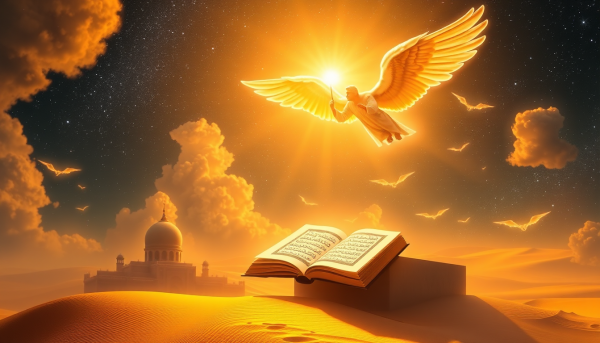
La volontà e il comando divini
Nel Corano la creazione è rappresentata come un atto di volontà divina. Il processo inizia con il comando di Allah: "Sia!" (Kun), e in quel momento l'esistenza si dispiega. Il Corano afferma: "In verità, quando Egli intende una cosa, il Suo comando è: 'Sia,' e essa è" (Corano 36:82). Questo verso sottolinea il potere della parola di Dio, dimostrando che la creazione è un'espressione della Sua sovranità.
La creazione dei cieli e della terra
Il Corano descrive la creazione dei cieli e della terra in diversi versetti. Allah ha creato l'universo in sei giorni, concetto riflesso nei versetti: "In verità, il vostro Signore è Allah, che ha creato i cieli e la terra in sei giorni" (Corano 7:54). Il termine "giorni" in questo contesto è spesso interpretato metaforicamente, simboleggiando fasi distinte o periodi della creazione, piuttosto che giorni letterali di 24 ore.
In tutto questo processo, Allah ha creato ogni cosa con scopo e precisione. Il Corano enfatizza la bellezza e l'ordine della creazione, esortando l'umanità a riflettere sui segni di Allah nel mondo naturale. Per esempio, nel Corano 2:164 si afferma: "In verità, nella creazione dei cieli e della terra, e nell'alternarsi della notte e del giorno ci sono segni per coloro che comprendono."
La creazione dell'umanità
La creazione dell'umanità ha un significato speciale nel Corano. Allah creò il primo uomo, Adamo, dall'argilla. Questo atto è raccontato in diversi versetti, come: "Egli ha creato l'uomo dall'argilla simile [a quella] della ceramica" (Corano 55:14). Adamo fu dotato di un'anima, rendendolo una creazione unica, capace di ragionamento e di decisioni morali.
Il Corano descrive anche la creazione di Eva (Hawwa) da Adamo, simboleggiando il partenariato e l'uguaglianza tra i due. Furono posti in Paradiso, dove godettero di una vita di abbondanza. Tuttavia, fu loro dato un unico comando: non mangiare da un albero particolare. La storia cambia quando vengono ingannati da Satana e consumano il frutto proibito. Questo atto di disobbedienza condusse alla loro espulsione dal Paradiso sulla Terra, dove furono incaricati di vivere e adorare Allah.
Lo scopo della creazione
Il racconto coranico sottolinea che lo scopo della creazione è adorare Allah. "E non ho creato i jinn e gli uomini se non per adorarmi" (Corano 51:56). Questo verso riassume la comprensione islamica del senso della vita e l'importanza della fede e dell'obbedienza a Dio.
Inoltre, all'umanità è concesso il libero arbitrio, che permette agli individui di scegliere tra il bene e il male. Questo libero arbitrio è fondamentale per il concetto di responsabilità nell'Aldilà, dove gli individui saranno giudicati in base alle loro azioni in questa vita.
Il ciclo della creazione
Il Corano evidenzia anche la natura ciclica della creazione, inclusi la vita e la morte. Parla del rinnovamento della terra tramite la pioggia e della crescita delle piante, servendo da metafora per la resurrezione e l'Aldilà.
"Egli è Colui che dà la vita e provoca la morte, e a Lui appartiene l'alternanza della notte e del giorno" (Corano 40:68). Questo ciclo rafforza la fede in un universo dotato di scopo e interconnesso.
Conclusione
La storia della creazione nel Corano è un ricco arazzo di saggezza divina, che mette in risalto la potenza di Allah, l'importanza dell'umanità e lo scopo della vita. Invita i credenti a riflettere sulla loro esistenza, sul mondo naturale e sul loro rapporto con il Creatore. Comprendendo questa narrazione, i musulmani sono incoraggiati a vivere con gratitudine, consapevolezza e senso di responsabilità verso il loro Creatore e il mondo che li circonda. Questa comprensione plasma la loro identità e guida le loro azioni nella ricerca di una vita retta.
The Divine Will and Command
In the Quran, creation is depicted as an act of divine will. The process begins with Allah's command: "Be!" (Kun), and at that moment, existence unfolds. The Quran states, "Indeed, when He intends a thing, His command is, 'Be,' and it is" (Quran 36:82). This verse emphasizes the power of God's word, demonstrating that creation is an expression of His sovereignty.
The Creation of the Heavens and the Earth
The Quran describes the creation of the heavens and the earth in several verses. Allah created the universe in six days, a concept reflected in the verses: "Indeed, your Lord is Allah, who created the heavens and the earth in six days" (Quran 7:54). The term "days" in this context is often interpreted metaphorically, symbolizing distinct stages or periods of creation, rather than literal 24-hour days.
Throughout this process, Allah created everything with purpose and precision. The Quran emphasizes the beauty and order of creation, urging humanity to reflect on the signs of Allah in the natural world. For instance, in Quran 2:164, it is stated: "Indeed, in the creation of the heavens and the earth, and the alternation of the night and the day are signs for those of understanding."
The Creation of Humanity
The creation of humanity holds a special significance in the Quran. Allah created the first human, Adam, from clay or dust. This act is recounted in several verses, such as: "He created man from clay like [that of] pottery" (Quran 55:14). Adam was endowed with a soul, making him a unique creation, capable of reasoning and moral decision-making.
The Quran also describes the creation of Eve (Hawwa) from Adam, symbolizing the partnership and equality between the two. They were placed in Paradise, where they enjoyed a life of abundance. However, they were given one command: not to eat from a specific tree. The story takes a turn when they are deceived by Satan and consume the forbidden fruit. This act of disobedience led to their expulsion from Paradise and onto Earth, where they were tasked with living and worshipping Allah.
The Purpose of Creation
The Quranic narrative emphasizes that the purpose of creation is to worship Allah. "And I did not create the jinn and mankind except to worship Me" (Quran 51:56). This verse encapsulates the Islamic understanding of life's meaning and the importance of faith and obedience to God.
Moreover, humanity is granted free will, which allows individuals to choose between right and wrong. This free will is fundamental to the concept of accountability in the Hereafter, where individuals will be judged based on their actions in this life.
The Cycle of Creation
The Quran also highlights the cyclical nature of creation, including life and death. It speaks of the earth's renewal through rain and the growth of plants, serving as a metaphor for resurrection and the afterlife. "And it is He who gives life and causes death, and His is the alternation of the night and the day" (Quran 40:68). This cycle reinforces the belief in a purposeful and interconnected universe.
Conclusion
The story of creation in the Quran is a rich tapestry of divine wisdom, emphasizing the power of Allah, the significance of humanity, and the purpose of life. It invites believers to reflect on their existence, the natural world, and their relationship with the Creator. By understanding this narrative, Muslims are encouraged to live with gratitude, mindfulness, and a sense of responsibility towards their Creator and the world around them. This understanding shapes their identity and guides their actions in the pursuit of a righteous life.